

Great Smoky Mountains National Park Elopement Packages
The Great Smoky Mountains have a way of making everything feel quieter. The mist sitting low in the ridgelines, the sound of a creek running below a trail you've never walked before, the way the light comes through old-growth forest in a way that doesn't look quite real — this is one of the most genuinely moving landscapes in the country, and it makes for an elopement that feels less like a wedding day and more like a beginning.
Spanning the Tennessee–North Carolina border, Great Smoky Mountains National Park is America's most visited national park — and still, somehow, one of the easiest places to find real stillness. Whether you're drawn to a waterfall ceremony in a mossy forest hollow, sweeping ridge views at Newfound Gap, or the open meadows of Cades Cove at golden hour, the Smokies offer more variety than almost any other park in the eastern U.S.
This guide covers everything you need to plan your Great Smoky Mountains elopement from start to finish — permit requirements, marriage license options for both states, the best ceremony locations, what each season actually looks like, and how to build a day that feels like yours. If you're also exploring the broader region, the Tennessee elopement guide and the North Carolina elopement guide (coming soon) are good companion reads.
If you already know you want to elope here and you're looking for someone to help you plan it, let's start the conversation.
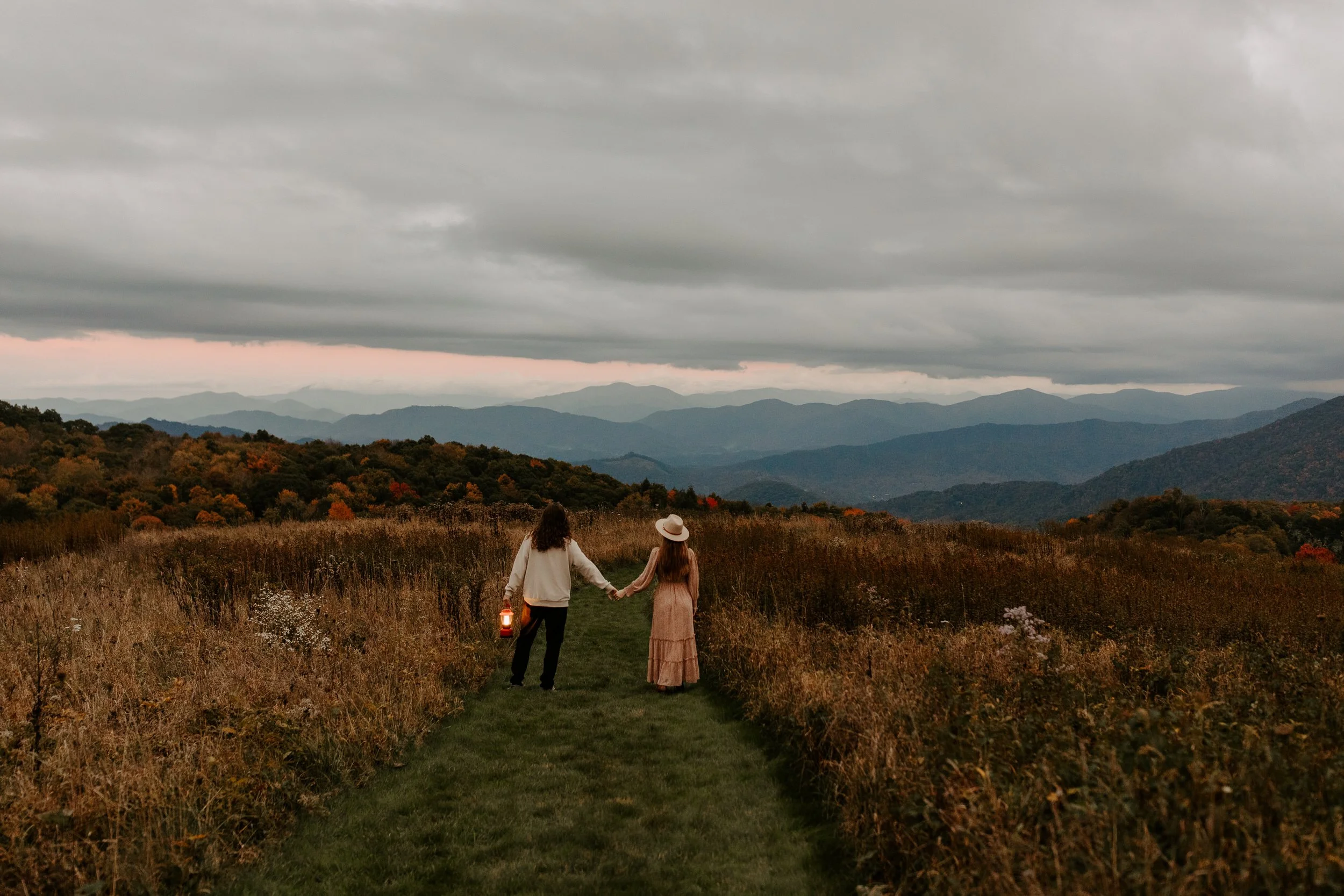
Where is Great Smoky Mountains National Park?
Great Smoky Mountains National Park straddles the Tennessee–North Carolina border, covering more than 800 square miles of ancient Appalachian landscape. It's the most visited national park in the country — drawing over 12 million people a year — and yet it still manages to feel spacious once you get off the main corridors. The park's elevation range means the experience shifts dramatically depending on where you are: open meadows and historic homesteads at the valley floor, dense old-growth forest mid-elevation, and sweeping ridge views above the clouds at the top.
The Tennessee side of the park is anchored by Gatlinburg and Pigeon Forge, which serve as the primary gateway towns for most visitors. On the North Carolina side, Cherokee and Bryson City offer a quieter, less commercial approach to the park — and access to some of the most underrated locations in the Smokies.
Getting Here
No entrance fee is required to enter Great Smoky Mountains National Park, though parking tags are required for all vehicles staying longer than 15 minutes (more on that in the permit section). There is no public transportation directly into the park, so a rental car or private vehicle is essential if you're traveling from outside the area. If you're staying in or near Gatlinburg, the town runs a seasonal trolley service that connects to the Sugarlands Visitor Center and Elkmont.
For couples flying in, the two closest airports are:
TYS is the most convenient option for most couples eloping on the Tennessee side of the park. AVL is worth considering if you're planning your ceremony near Cherokee or Bryson City, or if you want to pair your elopement with time in Asheville.
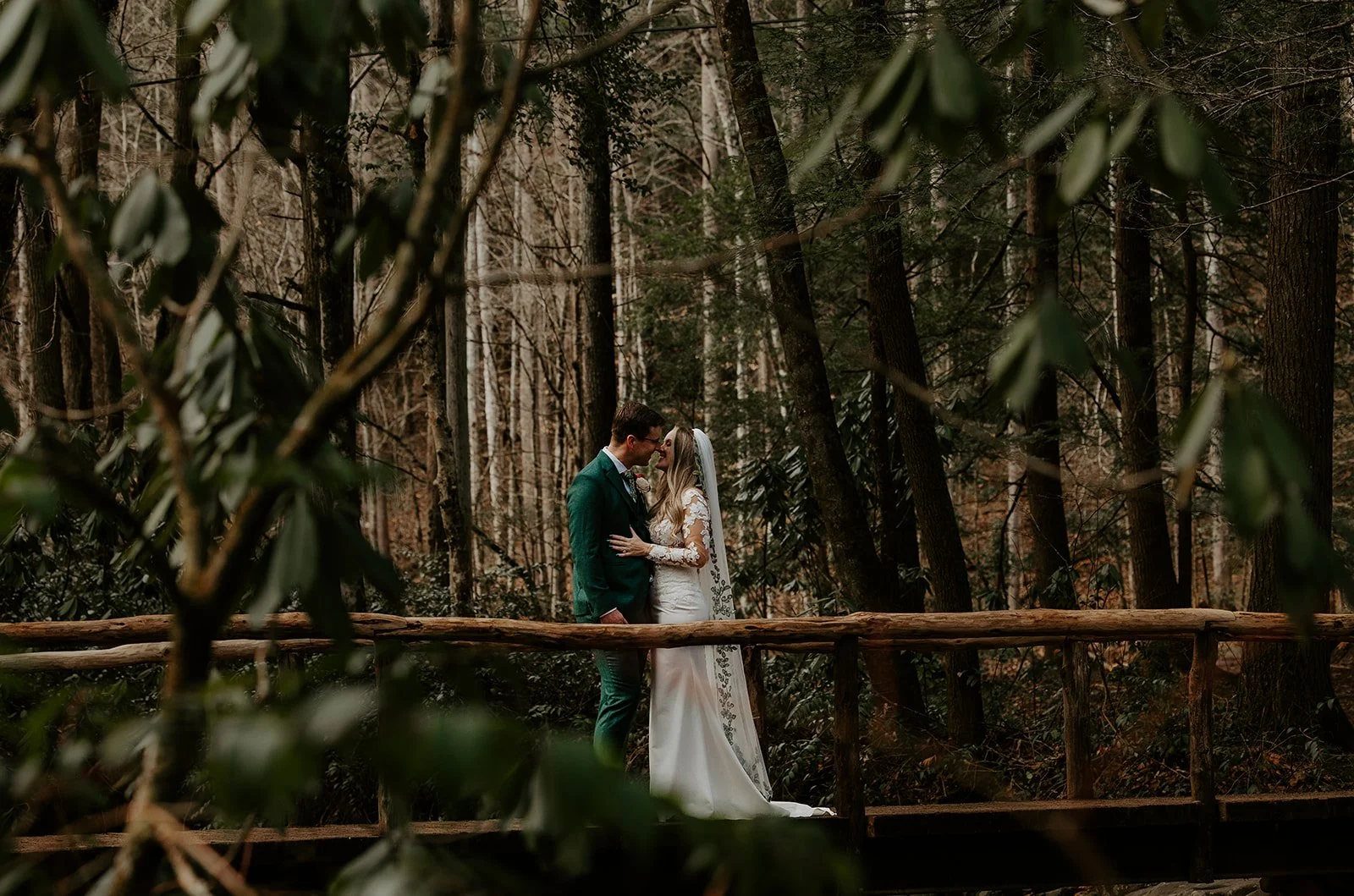
Why Elope in Great Smoky Mountains National Park?
There are a lot of beautiful places to elope in the eastern United States. What makes the Smokies different is the range. In a single day you can move from a mossy waterfall ceremony in a cathedral of old-growth hemlock to golden hour portraits on a ridgeline with mountain layers disappearing into the haze. The park shifts constantly — by elevation, by season, by the time of day — and that variety means your elopement can look and feel completely unlike anyone else's, even if you're standing in the same park.
A few other things that make GSMNP worth choosing:
No entrance fee. It's one of the only major national parks in the country that doesn't charge admission, which makes logistics simpler for you and any guests you're bringing.
Dual-state access. Because the park spans both Tennessee and North Carolina, you have flexibility in where you get your marriage license and where your ceremony takes place — two very different experiences of the same park.
45 approved ceremony locations. More designated options than most national parks, ranging from historic log churches to riverside hollows to high-elevation overlooks.
Year-round viability. Every season here has genuine photographic merit — spring wildflowers, summer forest depth, fall color that rivals anywhere in the country, and winter light that feels almost Scandinavian in its quietness.
Here's a quick overview of what to expect across the key planning categories:
If you're still deciding whether the Smokies are the right fit for your elopement — or if you're weighing it against other locations — let's talk through it. Helping you find the place that actually fits your vision is part of what I do.
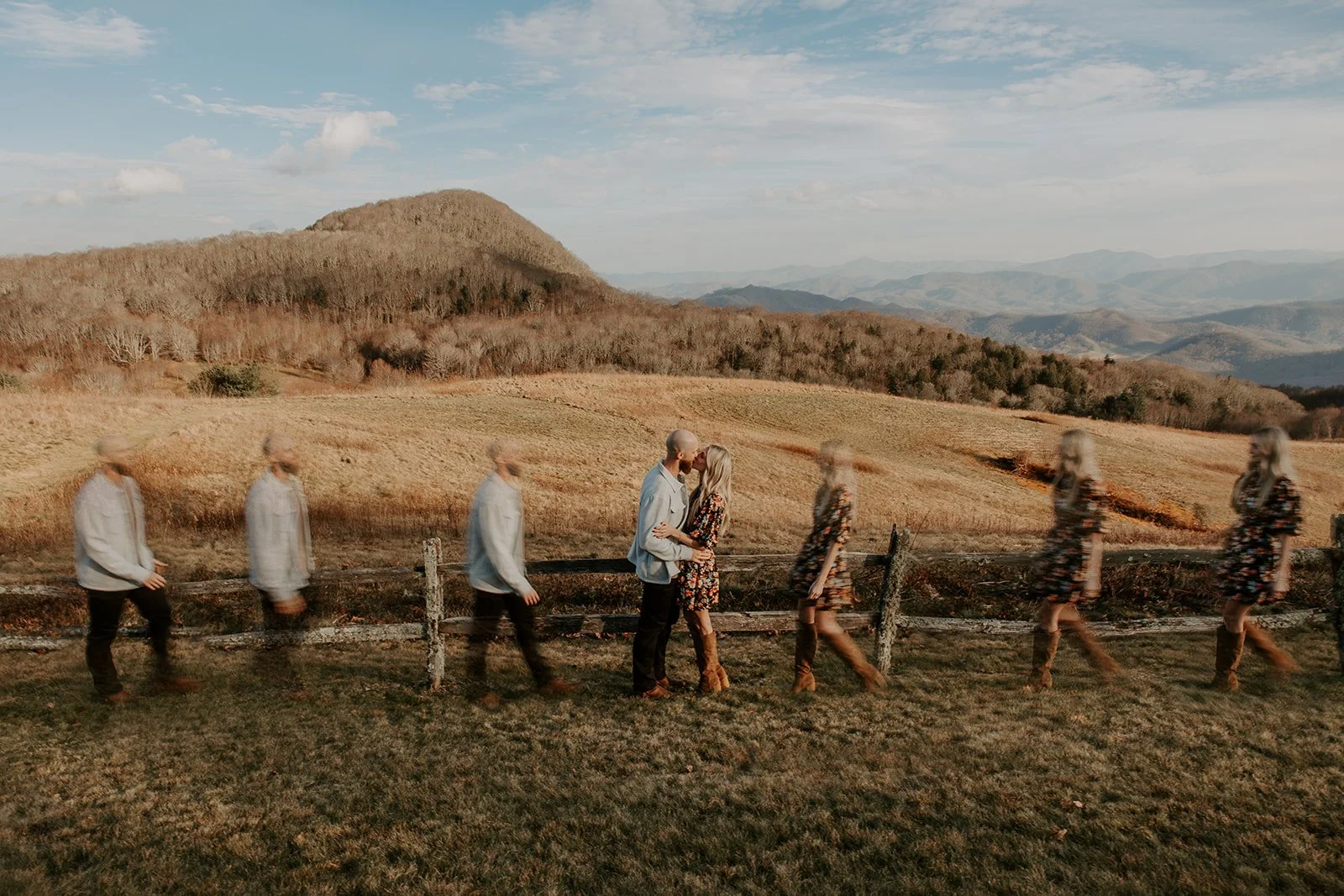
Ceremony Locations in Great Smoky Mountains National Park
The park has 50 approved ceremony sites spread across the Tennessee and North Carolina sides — more designated options than almost any other national park in the country. The map below shows all 50 locations organized by region, so you can start getting a feel for what's available on each side of the park.
Keep in mind that each location has its own character, access requirements, and light at different times of day. If you're not sure which site fits your vision, that's part of what the planning process is for — I can help you narrow it down based on your timeline, season, and what you actually want your ceremony to feel like. Let's talk through it.
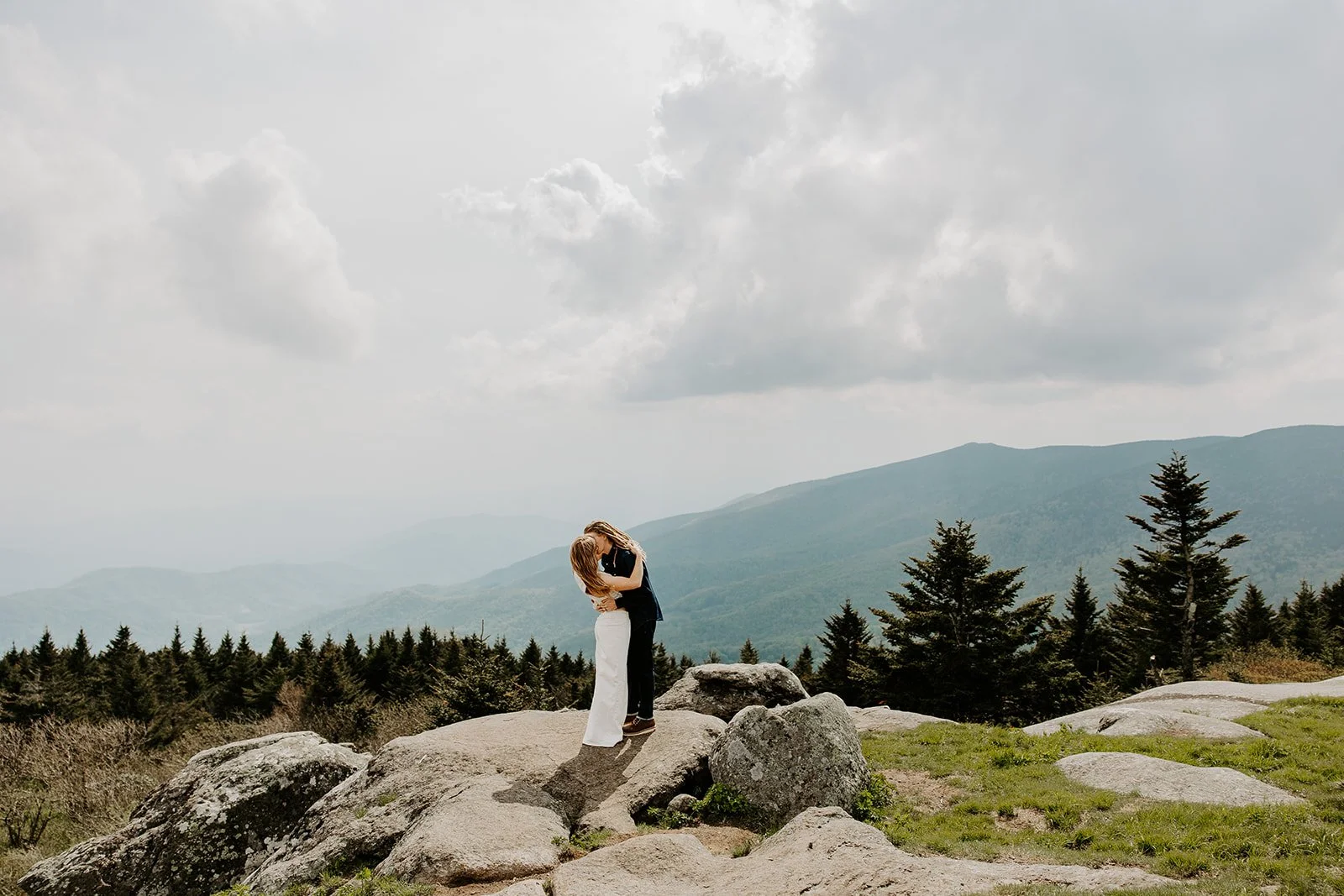
Marriage License Requirements for Great Smoky Mountains National Park
Because Great Smoky Mountains National Park spans both Tennessee and North Carolina, you have a choice when it comes to your marriage license — and that choice affects where in the park your ceremony can legally take place. Your license must be issued by the same state where your ceremony occurs, so it's worth understanding the differences before you decide which side of the park you want to elope on.
Here's a side-by-side comparison:
The simplest way to decide: choose your license state based on which side of the park your ceremony is on. If you're still figuring that out, the location section above — and the map — are good places to start. And if you want a second set of eyes on the decision, I'm happy to help you think it through.
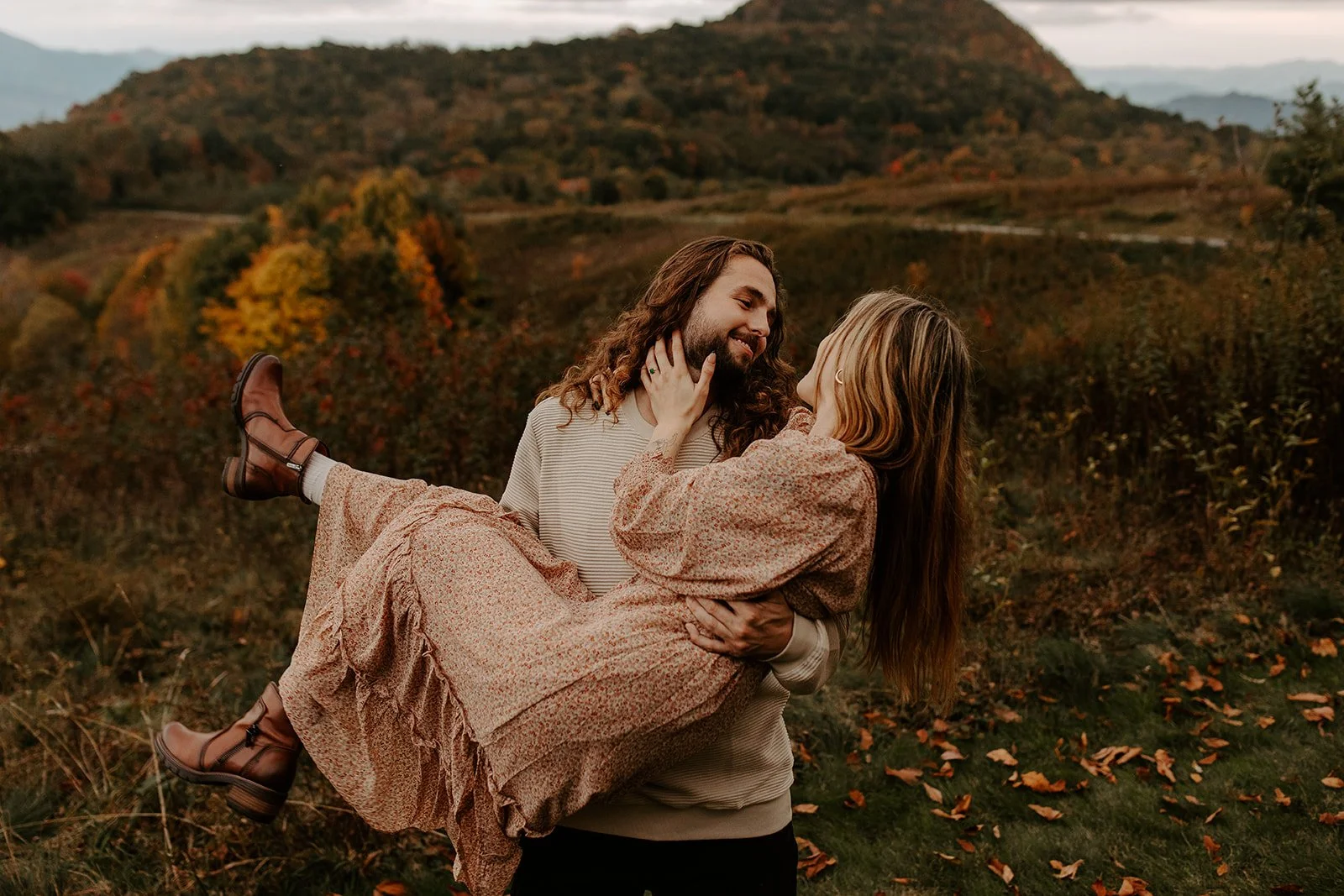
Permits & Fees for a Great Smoky Mountains Elopement
Special Use Permit
A Special Use Permit is required for all wedding ceremonies held at a designated location within Great Smoky Mountains National Park. Here's what you need to know:
Application fee: $50 (non-refundable)
Submission deadline: No less than 14 days before your ceremony date
How to apply: Submit through the NPS Special Use Permit form
Guest limits: Up to 25 people at outdoor locations (including all vendors and their vehicles); up to 50 people at historic church locations
Vehicle limit: 6 vehicles at outdoor locations; 8 vehicles at church locations
Time limit: 1 hour at outdoor locations; 1.5 hours at church locations — this includes setup, ceremony, photography, and cleanup
One thing worth noting: the time and guest limits include everyone present, not just your wedding party. If you're working with a photographer, florist, officiant, and a handful of guests, those all count toward your total. Planning your headcount early makes the permit process significantly smoother.
Parking Tags
Great Smoky Mountains National Park does not charge an entrance fee — one of the few major national parks in the country that doesn't. However, parking tags are required for all vehicles staying longer than 15 minutes. Other national park passes, including the America the Beautiful Pass, cannot be used in place of a parking tag.
Tags are valid for a single vehicle and must display the license plate number of the vehicle they're assigned to. If you're bringing guests, each vehicle will need its own tag — factor that into your planning.
Leave No Trace
Great Smoky Mountains National Park takes its environmental stewardship seriously, and eloping here means agreeing to do the same. Following the seven principles of Leave No Trace is required — pack out everything you bring in, stay on designated trails and ceremony areas, and leave the landscape exactly as you found it. If you're ever unsure whether something is permitted, ask a park ranger before your day rather than after.
If you'd like help navigating the permit process from start to finish, that's included in every elopement experience I offer. Start the conversation here.
Best Places to Elope in Great Smoky Mountains National Park
With 50 approved ceremony locations spread across two states, the Smokies offer more variety than almost any other national park in the country. The right location depends on the kind of day you want — whether that's a mossy waterfall hollow, a sweep of open ridge at 5,000 feet, a pastoral meadow with mountain framing, or a historic Appalachian church that seats your closest people in actual pews.
The table below covers the most sought-after locations across both sides of the park. Click any location name to jump directly to its description.
Cades Cove
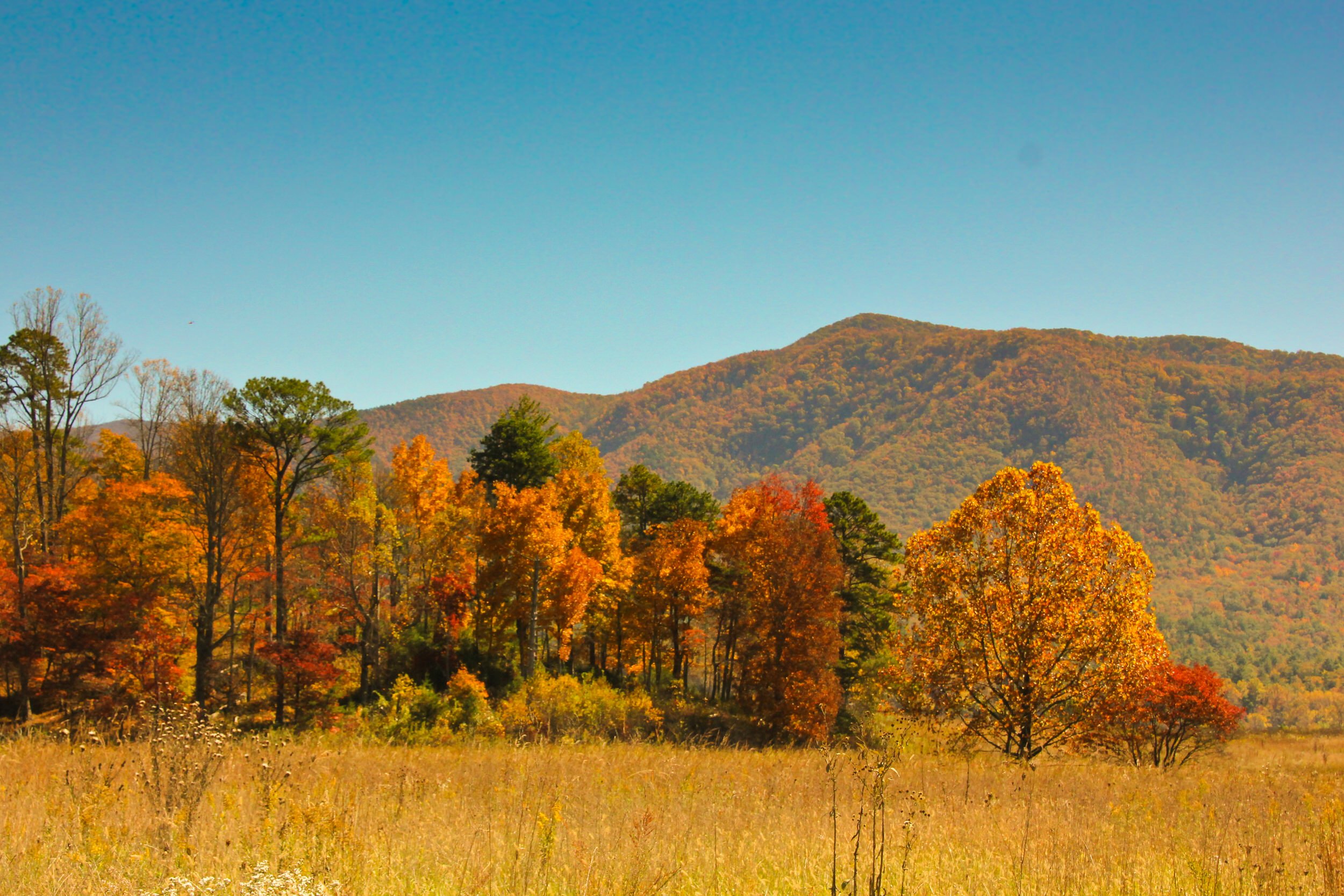
Cades Cove is the most iconic elopement location on the Tennessee side of the park — and one of the most photographically varied ceremony settings in the entire Smokies. The 11-mile one-way loop winds through a broad, open Appalachian valley ringed by mountains, passing historic homesteads, three 19th-century churches, and some of the best wildlife habitat in the eastern U.S. White-tailed deer, wild turkey, and black bear are all regularly spotted here.
For elopements, the approved sites within Cades Cove include the Primitive Baptist Church, the Methodist Church, and the Missionary Baptist Church — each of which can accommodate up to 50 guests, making them the best option in the park if you want a small gathering in a genuinely historic space. The LeQuire Cemetery Overlook and the Wildlife Overlook offer open meadow settings with mountain framing for couples who prefer something more exposed and pastoral.
Timing matters at Cades Cove. The loop is closed to vehicles on Wednesday and Saturday mornings until 10:00 am to allow cyclists and pedestrians priority access — a detail worth knowing when building your timeline. Early morning and late afternoon offer the best light and the lowest vehicle traffic. Fall is exceptional here: the open meadow turns golden, the surrounding ridges ignite with color, and the historic structures take on a quality that feels almost cinematic.
Foothills Parkway Overlooks

The Foothills Parkway runs along the western and northern edge of the park, offering a series of ridge-top pull-offs with some of the most open, unobstructed views in the Smokies. Unlike the forest-heavy interior of the park, the Foothills Parkway overlooks sit above the tree line — wide sky, layered mountain ridges disappearing into haze, and nothing between you and the horizon.
There are multiple approved ceremony sites along the parkway, including Greasy Cove Overlook, Allen Grove Overlook, Green Mountain Overlook, Paw Paw Hollow Overlook, Wolf Creek Overlook, Little Mountain Overlook, Butterfly Gap Overlook, Wolfpen Gap Overlook, Dunlap Branch Overlook, and Look Rock Tower. Each has its own character and vantage point, but all share the same essential quality: sky, ridge, and silence.
This is the best part of the park for sunset and golden hour. The western orientation means the light comes in long and warm across the mountain layers in the final hour before dark — the kind of light that makes portraits look like they were lit intentionally. If a sweeping, open-air ceremony with a view that keeps going is what you're after, the Foothills Parkway delivers it consistently.
Cataract Falls
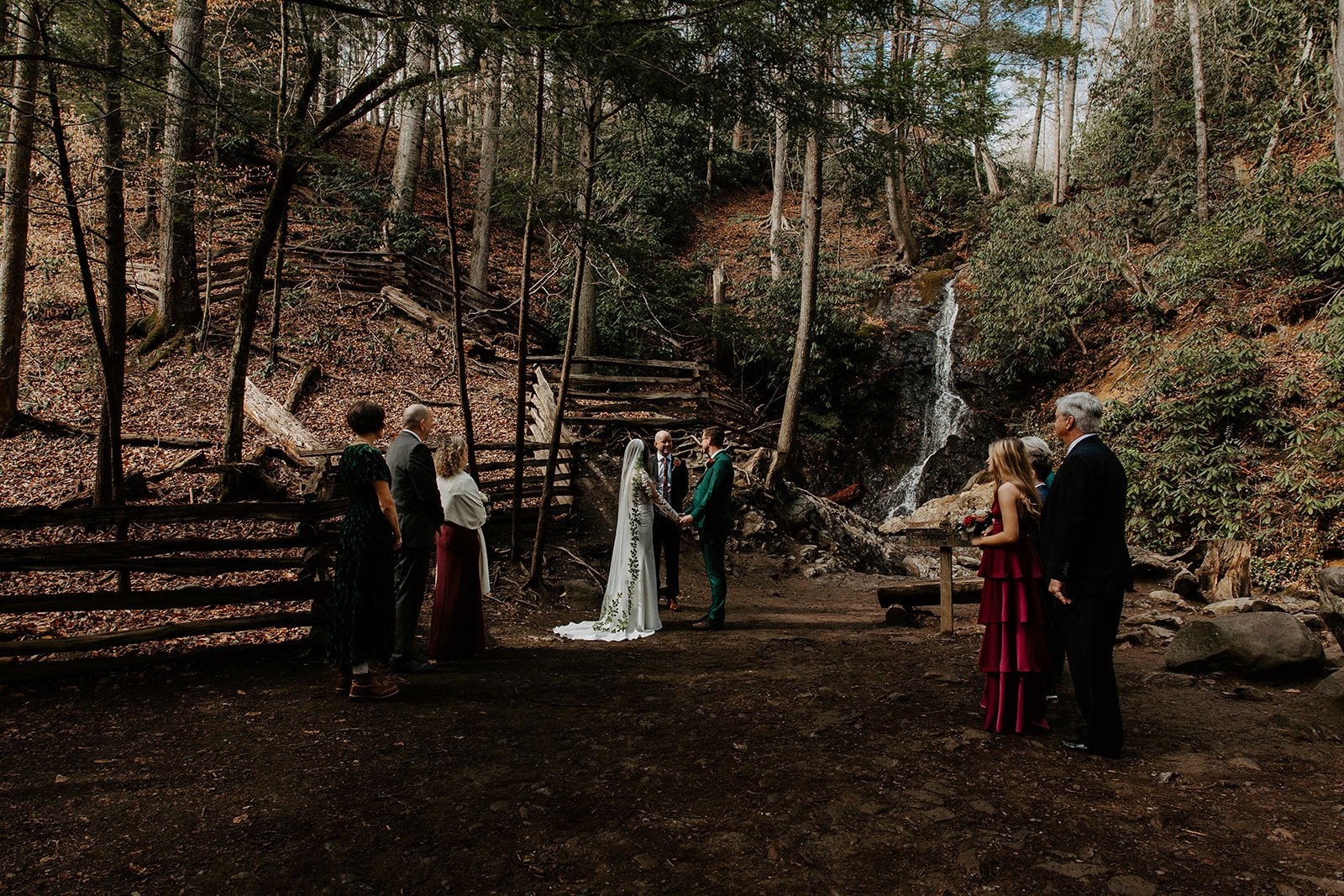
Cataract Falls is one of the most intimate ceremony sites in the park — and one of the most accessible. A short walk from the Sugarlands Visitor Center brings you through a hemlock and rhododendron hollow to a shaded waterfall tucked into a curve of mossy rock. The light here is soft and diffused even in the middle of the day, filtered through a dense canopy that keeps the temperature noticeably cooler than surrounding areas.
What makes Cataract Falls work so well for elopements is its scale. It's not a dramatic, towering cascade — it's a quiet, enveloping waterfall in a forest hollow that feels genuinely private. The sound of moving water surrounds the ceremony space, and the surrounding ferns, mossy boulders, and old trees create a backdrop that photographs beautifully in every season.
Because of its proximity to the Sugarlands Visitor Center, Cataract Falls is a practical anchor point for couples coordinating vendors or guests. It's also a strong pairing with the Elkmont Historic District and Chimneys Picnic Area for multi-location days.
Greenbrier

Greenbrier is one of the quietest, least-trafficked corners of the Tennessee side — and one of the most beautiful. The area sits east of Gatlinburg along a cold, fast-moving mountain stream lined with old growth hardwoods and dense rhododendron tunnels that peak in late May and early June. Three approved ceremony sites are located here: Greenbrier #1, Greenbrier #2, and the Greenbrier Picnic Pavilion.
What separates Greenbrier from other waterside locations in the park is the quality of the forest itself. The trees here are genuinely old — wide, lichened, with that particular stillness that only comes from uninterrupted growth over many decades. In late spring the rhododendron blooms are extraordinary, lining the road and arching over the stream in tunnels of white and pink. In fall the canopy turns gold and copper, and the light coming through the leaves onto the water is unlike anything else in the Smokies.
Greenbrier is a strong choice for couples who want forest depth and seclusion without a demanding hike — the terrain is flat and accessible, and the sites are reached by a short drive off the main road.
Spence Cabin

Spence Cabin offers something genuinely rare among the park's 50 approved ceremony sites: an indoor or semi-sheltered option with real amenities. Situated within the Elkmont Historic District, the cabin features outdoor patios in a forested setting, seats up to 40 guests, and comes with tables and chairs provided. It also has wheelchair accessible entrances and restrooms — making it one of the most accessible ceremony venues in the park for couples with mobility considerations or guests who need easier access.
The Elkmont Historic District itself adds a layer of atmosphere that's hard to replicate. The surrounding landscape is a preserved early 20th-century summer colony — weathered cabins, mossy paths, the Little River running alongside — with an atmosphere that feels suspended somewhere between wild and domestic. It's a deeply textured environment that photographs in a way that's entirely its own.
Spence Cabin is a particularly good fit for couples who want to host a small gathering without worrying about weather, or who simply want the reassurance of a defined, prepared space for their ceremony.
Metcalf Bottoms
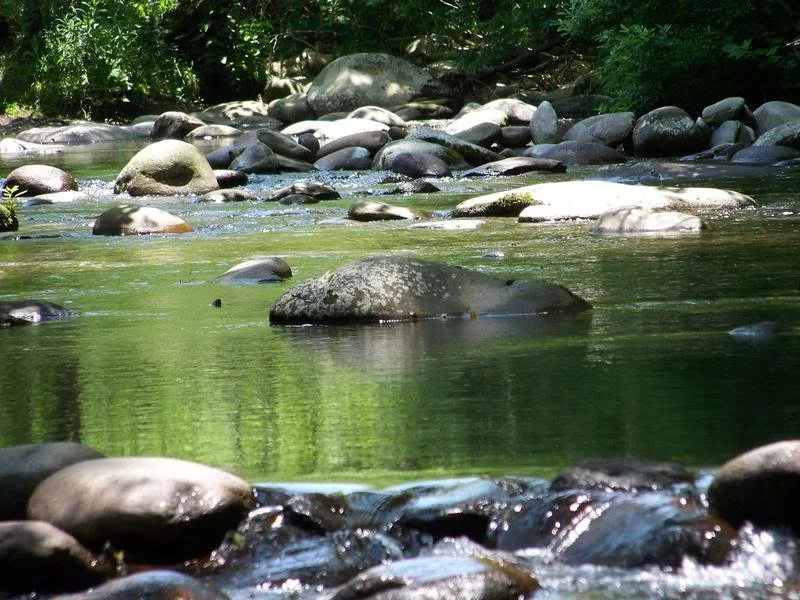
Metcalf Bottoms sits along the Little River in one of the most graceful stretches of the Tennessee side of the park. The terrain here is flat and open, with mature hardwoods arching over a wide, clear river and the surrounding forest staying dense and green well into fall. Two approved ceremony sites are available: the Metcalf Bottoms Picnic Area and the Metcalf Bottoms Picnic Pavilion.
This is a naturally relaxed location — it doesn't demand anything dramatic from your day. It works especially well as a mid-day ceremony spot, where the soft, filtered light through the forest canopy keeps the environment comfortable even in summer. Couples who want something calm, unhurried, and quietly beautiful without committing to a long hike or high-elevation exposure consistently connect with Metcalf Bottoms.
It also pairs naturally with other locations along the Little River corridor — Greenbrier, Tremont, and the Foothills Parkway are all within a reasonable drive, making it a strong anchor point for multi-location days.
Newfound Gap
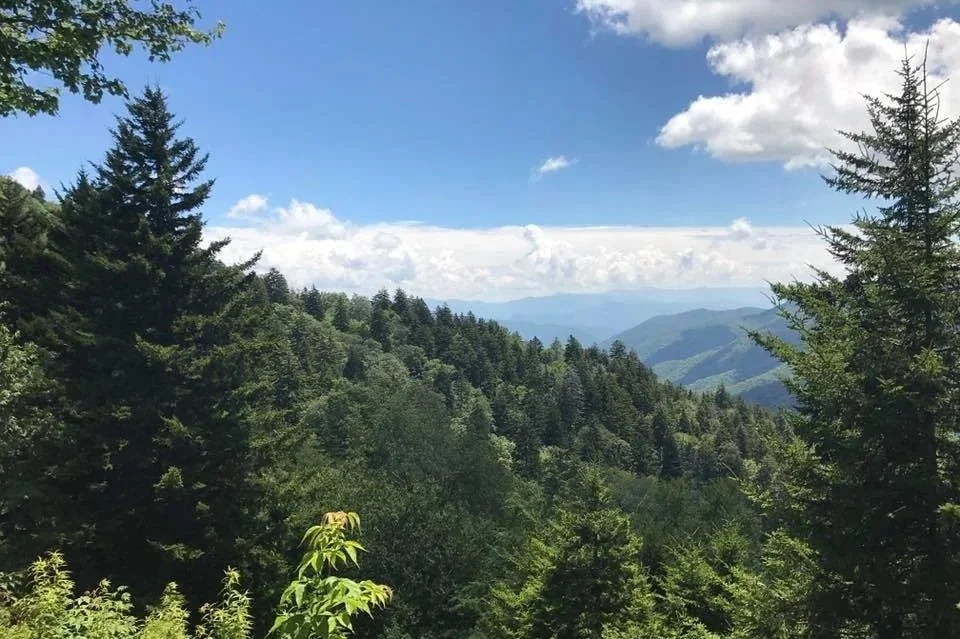
Newfound Gap sits directly on the Tennessee–North Carolina state line at 5,046 feet — the highest point in the park accessible by road, and the place where the Appalachian Trail crosses the main park highway. The views here are panoramic in every direction: ridge after ridge of Smoky Mountain peaks dissolving into haze, with no foreground clutter and nothing blocking the horizon. It's one of the most genuinely impressive viewpoints in the eastern United States.
For elopements, Newfound Gap offers a ceremony environment that feels earned even though you drove to it. The elevation brings cooler temperatures year-round, a noticeable shift in vegetation from the valley floor, and a quality of light — especially at golden hour — that turns the layered ridges into something almost abstract. On clear fall mornings, the view can stretch for over a hundred miles.
Because it sits on the state line, Newfound Gap works with either a Tennessee or North Carolina marriage license — just confirm which side of the overlook your ceremony takes place on when you submit your permit. It's one of the few locations in the park where the dual-state nature of the Smokies actually works in your favor.
Kuwohi (Clingmans Dome)
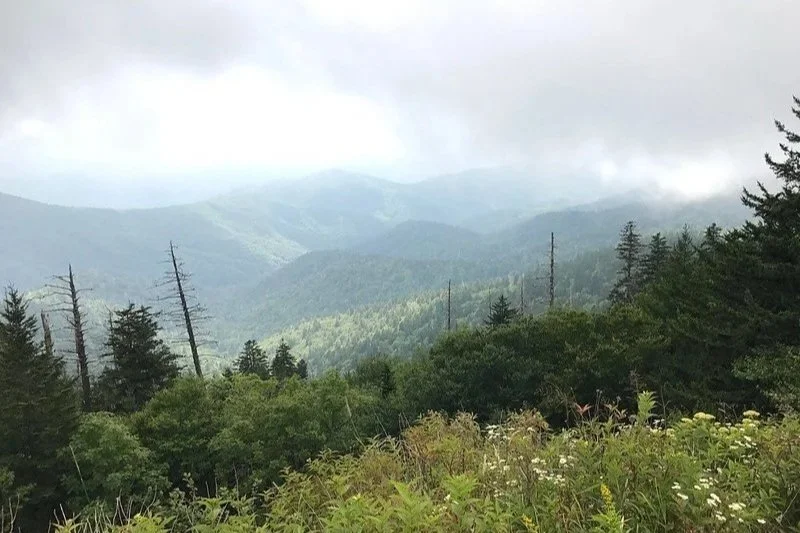
At 6,643 feet, Kuwohi is the highest point in Great Smoky Mountains National Park — and one of the most otherworldly ceremony environments in the entire country. The parking area sits at the end of a seven-mile spur road off Newfound Gap Road, and a short but steep paved trail leads up to the observation tower at the summit. On clear days the view from the top stretches into multiple states. On cloudy days you're standing above the clouds entirely, surrounded by a sea of white with the peaks of the Smokies breaking through.
The summit environment is unlike anything else in the park. The spruce-fir forest at this elevation is dense and ancient-feeling, draped in moss and lichen, with a quality of cool, filtered light that shifts constantly as clouds move through. It photographs in a way that feels more Pacific Northwest than Appalachian — moody, green, and deeply atmospheric.
The Kuwohi road is closed to vehicles from December through March, so winter ceremonies here aren't possible. Spring and fall offer the most dramatic conditions. Summer mornings are worth considering for the light and the cooler temperatures before afternoon clouds build in.
Mingus Mill
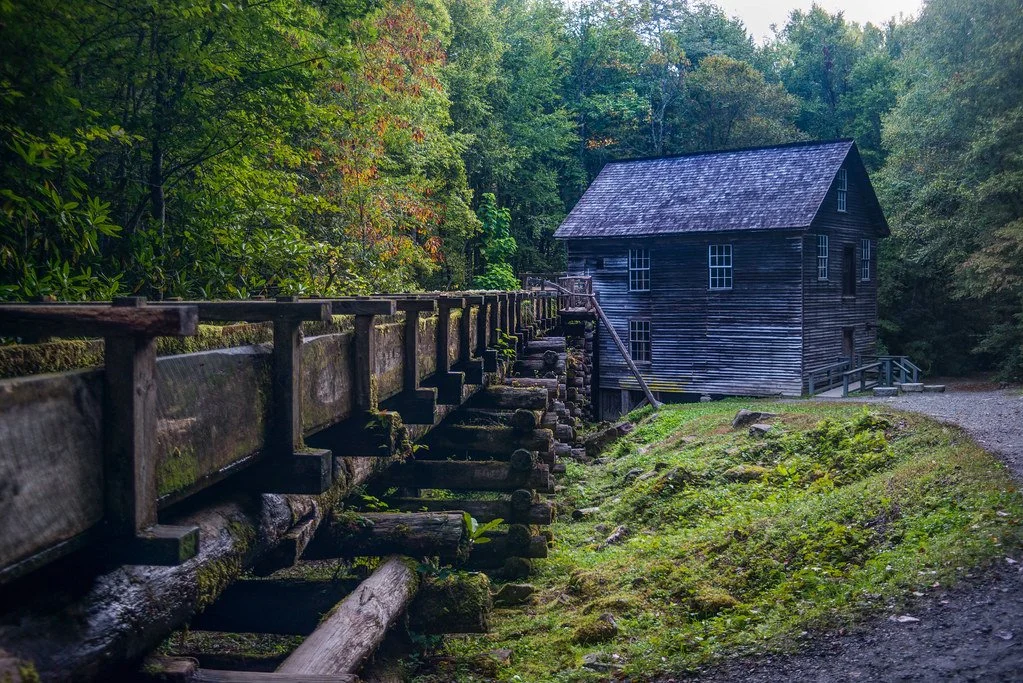
Mingus Mill is the most photogenic historic structure on the North Carolina side of the park. Built in 1886, the grist mill sits along a clear mountain stream just north of the Oconaluftee Visitor Center — stone construction, weathered wood siding, a wooden waterwheel turning in the current, and old-growth trees framing the whole scene. It's one of those places that looks exactly the way you'd want it to look, without requiring any particular effort to photograph beautifully.
For couples drawn to texture, history, and craft — the kind of people who notice the quality of light on old wood and the sound of water over stone — Mingus Mill is an obvious fit. It's also remarkably accessible: flat terrain, easy parking, and proximity to the Cherokee entrance make it a strong option for couples arriving from Asheville or coordinating guests without a long drive into the park.
Mingus Mill pairs naturally with the Oconaluftee River Trail and Cataloochee Valley for multi-location days on the NC side.
Deep Creek
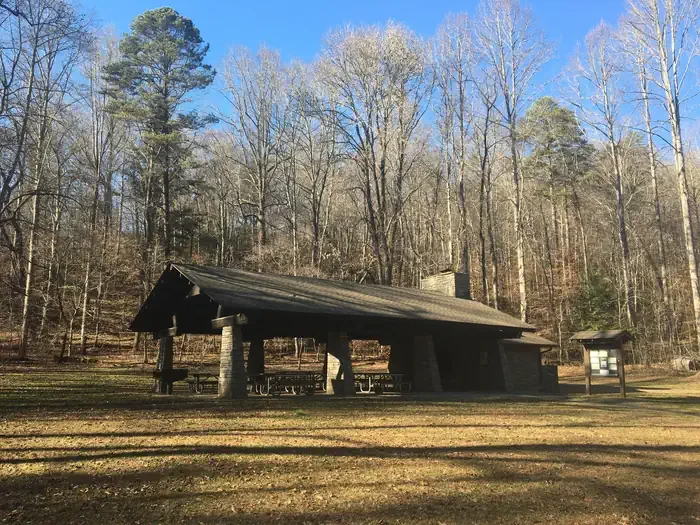
Deep Creek is one of the most lush and waterfall-rich corners of the North Carolina side, accessed from Bryson City near the park's southern boundary. The Deep Creek Picnic Pavilion is the approved ceremony site here, situated at the trailhead where three waterfalls — Tom Branch Falls, Indian Creek Falls, and Juney Whank Falls — are all within a short, easy walk. The forest in this area is dense and green nearly year-round, with the creek running cold and clear alongside the trail.
What makes Deep Creek worth considering is the combination of accessibility and genuine wildness. You're in a deep forest hollow with moving water on all sides, but you're not far from parking, and the terrain is manageable for most fitness levels. It's a particularly strong option for couples who want a waterfall-adjacent ceremony without committing to a more demanding hike, and for anyone approaching the park from Bryson City or Asheville rather than the Gatlinburg side.
Cataloochee Valley
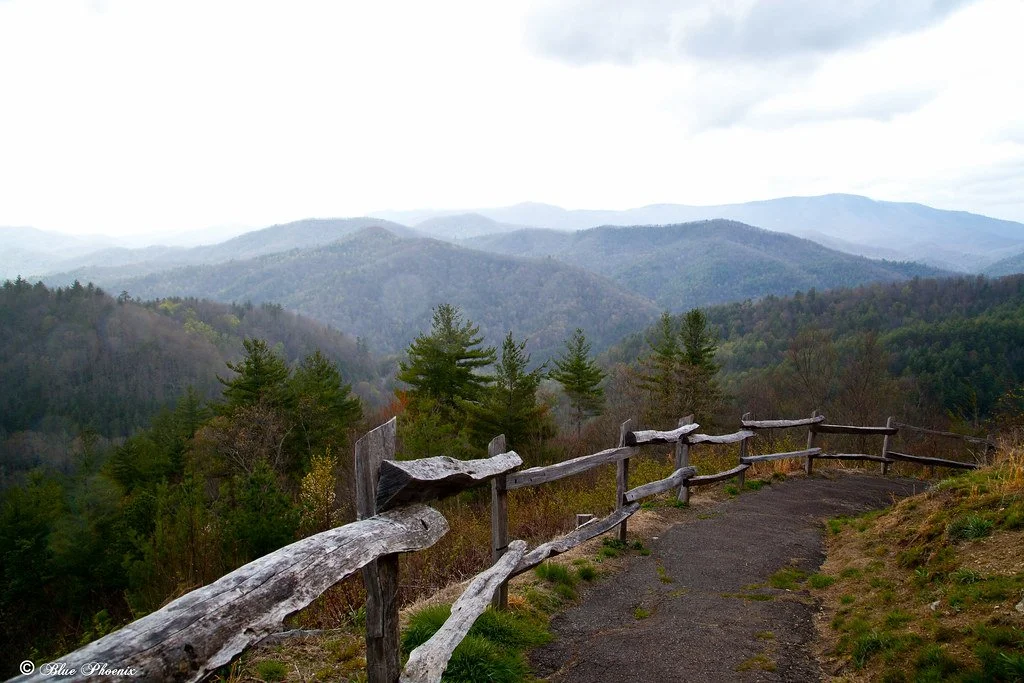
Cataloochee is the most remote and arguably the most dramatic location on the North Carolina side of the park. Getting here requires a winding mountain road that keeps casual visitors away — which is precisely what makes it so good. The valley opens into a broad, pastoral landscape of open meadows, hardwood forest edges, and historic homesteads, with the surrounding mountains rising steeply on all sides. It's one of the best elk viewing locations in the eastern U.S., with herds regularly visible in the meadows at dawn and dusk.
Two ceremony sites are approved in Cataloochee: the Cataloochee Valley Overlook for an open-air meadow ceremony, and Palmer Chapel — a white clapboard church built in 1898 that sits at the meadow's edge and seats up to 50 guests. Palmer Chapel is one of the most quietly stunning ceremony spaces in the entire park: small, honest, and surrounded by a landscape that has barely changed in a hundred years.
The drive to Cataloochee is part of the experience. Plan extra time, arrive early if you want elk sightings, and treat the remoteness as an asset rather than an inconvenience — it's exactly what keeps this valley feeling the way it does.
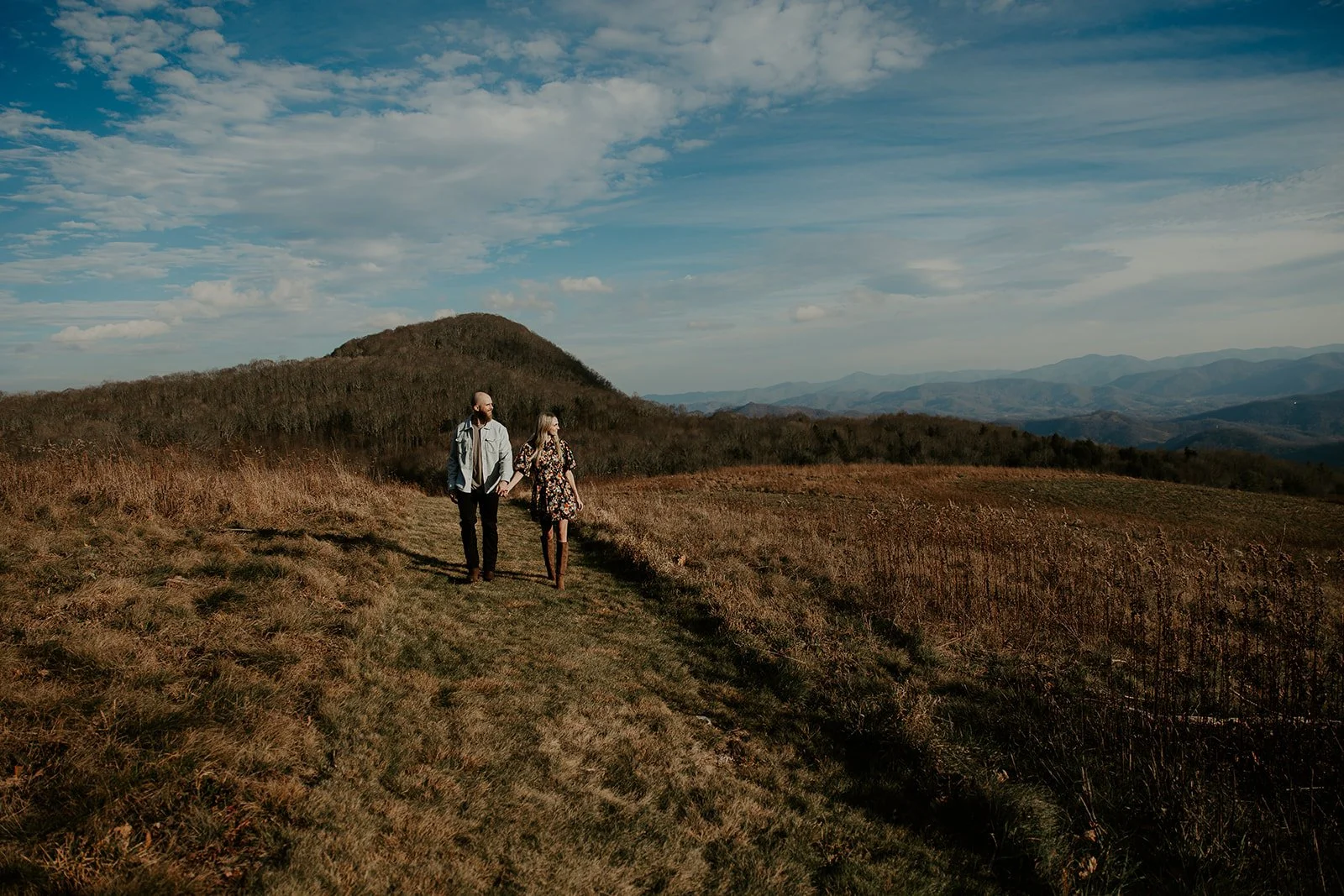
What to Do Around Great Smoky Mountains National Park
An elopement in the Smokies is rarely just a ceremony. Most couples who come here build their trip around the park itself — arriving a day or two early, staying after, and treating the whole thing as a proper escape. The landscape makes that easy. There's enough variety in a relatively contained area that you can move between experiences without ever feeling like you're running an itinerary.
Hiking + Wilderness
The park has over 800 miles of maintained trails ranging from flat riverside walks to demanding backcountry routes. For couples who want something close to their ceremony day without a serious commitment, Alum Cave Trail is one of the most striking moderate hikes in the park — a geological corridor of bluff overhangs and cave formations leading toward the high country. Laurel Falls is the most popular waterfall hike on the Tennessee side and earns its reputation. If you want real solitude, the Appalachian Trail corridor above Newfound Gap offers high-elevation ridge walking with views that open and close as the clouds move through.
Wildlife
Great Smoky Mountains National Park is home to the largest protected black bear population in the eastern U.S., with an estimated 1,500 bears living within park boundaries. White-tailed deer, wild turkey, and river otters are common throughout the park. For elk, Cataloochee Valley and the Oconaluftee River Trail near Cherokee are your best options — herds graze the open meadows regularly at dawn and dusk, and the experience of watching them in that landscape is genuinely arresting.
Scenic Drives
Cades Cove Loop Road is an 11-mile one-way loop through a historic valley that earns a slow, unhurried drive — especially in early morning when the mist sits in the meadow and the light is still low. Newfound Gap Road connects Gatlinburg to Cherokee through the heart of the park and is one of the most scenic drives in the eastern U.S. at any time of year. The Foothills Parkway along the western edge of the park offers open ridge views with very little traffic — particularly good at golden hour.
Rafting + Water
The rivers surrounding the Smokies are some of the best whitewater in the Southeast. The Nantahala River near Bryson City is a beloved Class II–III run accessible to most fitness levels — a strong choice for couples who want a shared adrenaline experience the day before or after their ceremony. Calmer float options are available on the Pigeon River on the Tennessee side. If you just want to be near the water, wade in at Metcalf Bottoms or along the Greenbrier Creek — cold, clear, and completely unhurried.
History + Culture
The Smokies are as much a cultural landscape as a natural one. The Cades Cove historic district preserves 19th-century homesteads, grist mills, and three original churches in a working landscape that gives a genuine sense of Appalachian mountain life. Mingus Mill near Cherokee is one of the best-preserved working grist mills in the region. The Museum of the Cherokee People in Cherokee is worth an afternoon — a serious, beautifully executed museum that tells the story of the Eastern Band of Cherokee Indians in their own voice.
Gatlinburg + Surrounding Towns
Gatlinburg is the primary Tennessee gateway town and operates at a very different frequency than the park itself — loud, touristy, and relentlessly commercial. That said, it has excellent restaurants, easy access to supplies, and a handful of genuinely good spots if you know where to look. Bryson City on the NC side is quieter, smaller, and increasingly well-regarded for its food and lodging scene. Asheville, about 90 minutes from the park's NC entrance, is one of the best small cities in the South for food, art, and independent culture — worth building a night or two around if your schedule allows.
Stargazing
Great Smoky Mountains National Park holds International Dark Sky Park designation in select areas, and the high-elevation sites — particularly Clingmans Dome and the Foothills Parkway overlooks — offer exceptional stargazing on clear nights away from Gatlinburg's light pollution. A clear night at Morton Overlook or along the Foothills Parkway after your ceremony is one of those experiences that doesn't need any enhancement.
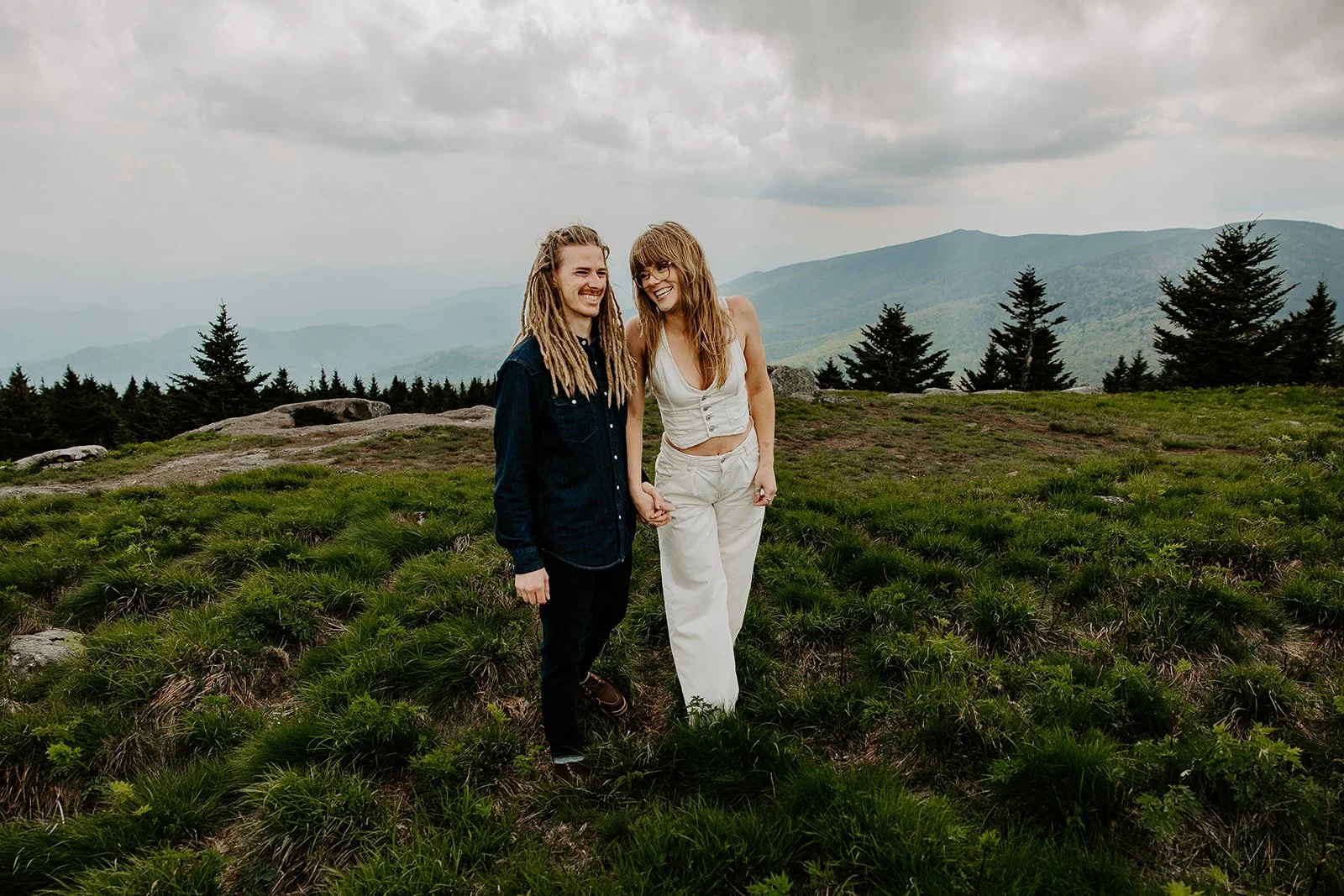
When to elope in Great Smoky Mountains National Park
Every season in the Smokies is genuinely worth considering — which is both a gift and a complication when you're trying to choose a date. The honest answer is that the right time depends less on which season looks best in photos and more on what kind of experience you actually want. Here's what each season is really like.

Spring (March to May)
Spring is when the Smokies earn their reputation as a wildflower destination. The park is home to over 1,500 species of flowering plants, and from mid-March through May they bloom in successive waves up the elevation gradient — trillium and hepatica first in the valleys, then wild geranium and fire pink moving upward as the season progresses. Rhododendron and mountain laurel peak in late May and early June, turning places like Greenbrier into something that barely looks real.
Snowmelt swells the rivers and waterfalls through March and April, which makes waterfall ceremony sites like Cataract Falls and Deep Creek look their absolute best. Higher elevations can still see snow into early April, so if you're planning a Newfound Gap or Kuwohi ceremony in spring, build weather flexibility into your timeline. Temperatures in the valleys are comfortable — warm days are common, but evenings cool quickly.

Summer (June to August)
Summer brings the highest visitor numbers of any season, and the lower elevations of the park can feel it. Gatlinburg and the main park corridors are genuinely busy from mid-June through August. The strategy for a summer elopement is elevation and timing — higher locations like Newfound Gap and the Foothills Parkway stay pleasantly cool even when the valleys are humid, and an early sunrise start gets you into the park before the crowds arrive and gives you the best possible light.
Afternoon thunderstorms are a regular occurrence in summer, typically building after noon and clearing by evening. If weather is a concern, structuring your ceremony in the morning and saving lower-stakes portrait time for the afternoon gives you the most flexibility. The forest is at its most lush and deeply green in summer — if rich, saturated color and dense canopy are what you're after, this is the season for it.
Fall (September to November)
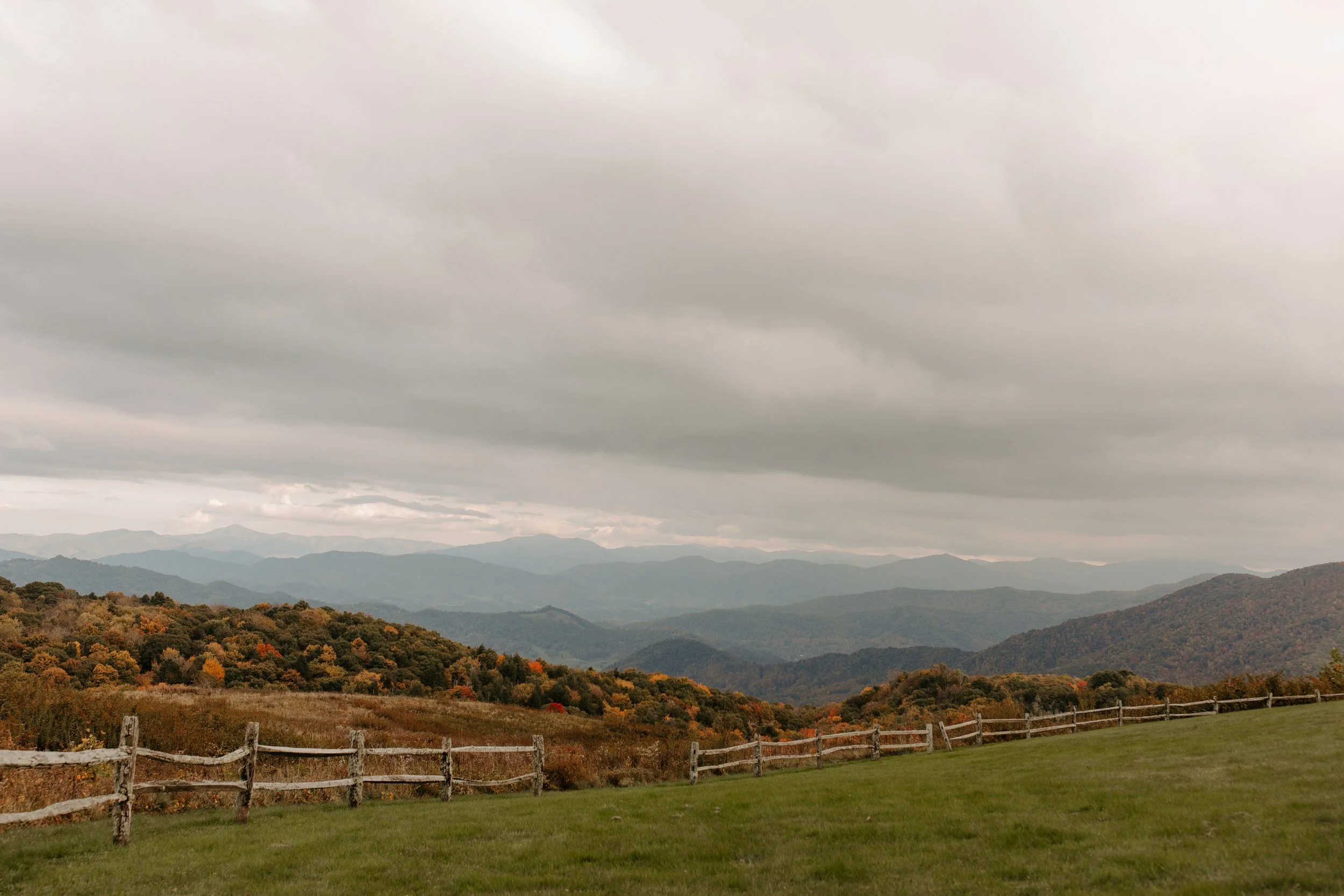
Fall is the most sought-after season in the Smokies, and for good reason. The color sequence here is one of the best in the eastern U.S. — starting above 4,000 feet in late September and early October, then moving down through mid and lower elevations between mid-October and early November. Sugar maples, scarlet oaks, sweetgum, and hickories are all represented, which means the palette is genuinely varied rather than a single note of orange.
Fall is also the busiest season in the park. Permit slots at popular locations fill quickly, and parking at Cades Cove, Newfound Gap, and the Foothills Parkway can be competitive on weekends. If you're planning a fall elopement, submit your permit application as early as possible and strongly consider a weekday date — more on that below.

Winter (December to February)
Winter in the Smokies requires flexibility, but it rewards couples who can offer it. The crowds drop dramatically after Thanksgiving, and the landscape shifts into something quieter and more austere — bare hardwood canopy revealing mountain structure that's invisible in summer, occasional snow transforming the forest and meadows, and a quality of cold, low-angle light that's unlike any other season. Some of the most genuinely intimate elopement experiences happen here simply because the park empties out.
The practical reality is that higher elevation roads — including the Clingmans Dome road and portions of the Foothills Parkway — close during winter and reopen based on conditions. Newfound Gap Road can close temporarily during snowstorms. If winter is your season, build location flexibility into your planning and have a backup site in mind. The lower-elevation sites — Cades Cove, Greenbrier, Metcalf Bottoms, Mingus Mill — remain accessible through most of winter and can be extraordinary in snow.
A Note on Weekday Elopements
Regardless of season, a weekday elopement in the Smokies is almost always the better experience. Weekend traffic at the main corridors — particularly Cades Cove, Newfound Gap, and Gatlinburg — can be significant, and the difference between a Saturday morning and a Tuesday morning at the same location is often dramatic. If your schedule has any flexibility, Tuesday through Thursday tend to offer the most relaxed conditions, the easiest parking, and a sense of having the park more to yourselves. It's a small logistical adjustment that makes a real difference in how your day feels.
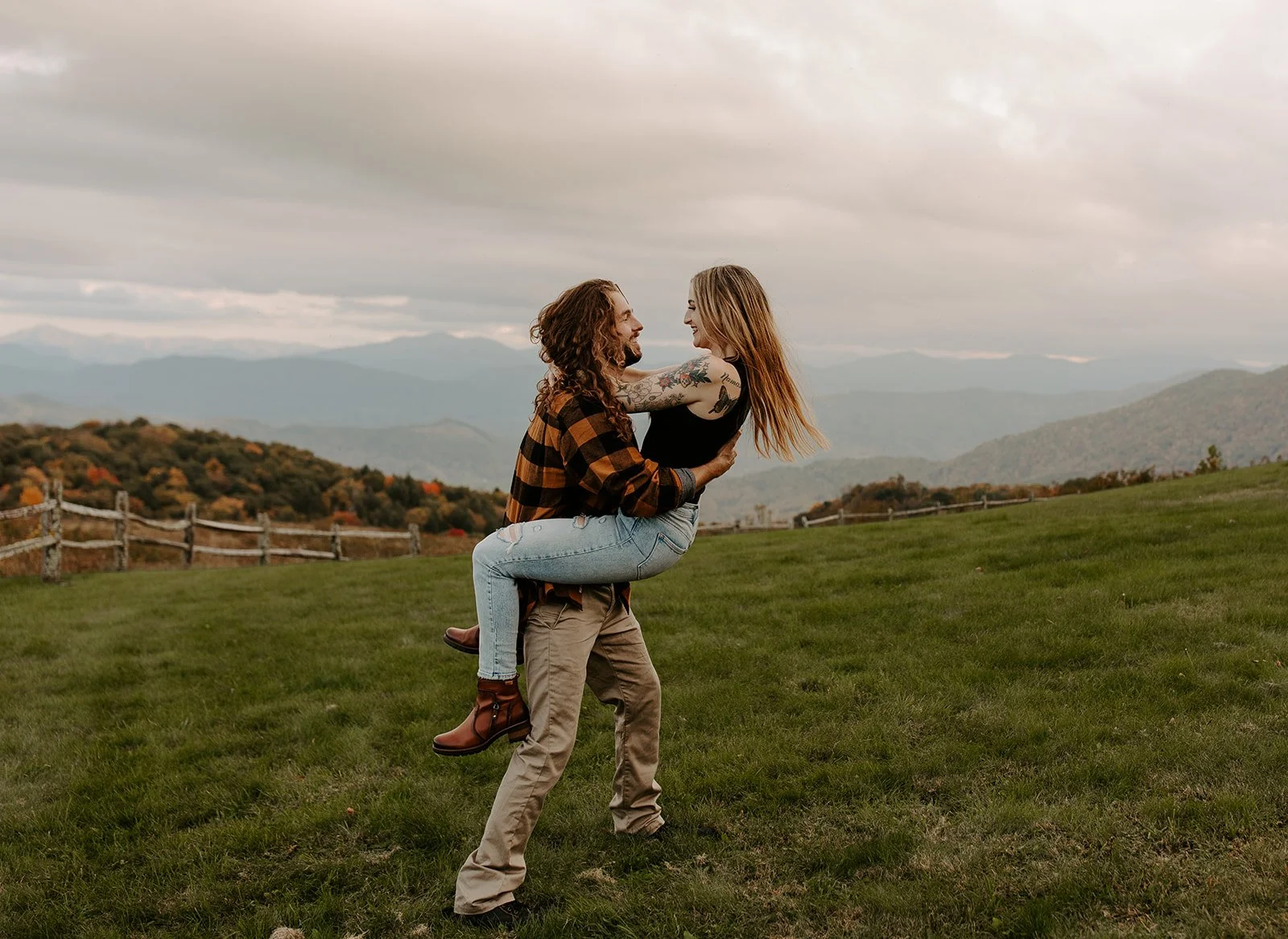
What to Wear to Your Great Smoky Mountains Elopement
What you wear to your elopement in the Smokies should do two things: look the way you want to look, and work for the environment you're actually in. Those two things are more compatible than most people expect — but they do require some intentional thinking, especially if your ceremony involves any elevation, early morning timing, or time on trail.
Attire
The Smokies are a forested, often humid environment with significant elevation change across the park. A few things worth knowing before you choose your outfit:
Dresses and skirts photograph beautifully in the Smokies — movement in a forest setting, against waterfalls, and in open meadows is consistently striking. A flowing dress with some weight to it (so it moves rather than blows) tends to work well across most locations. If your ceremony involves any trail walking, consider the hem length and whether the fabric can handle light contact with vegetation or damp rock.
Suits and separates offer more flexibility for varied terrain. A well-fitted suit in a neutral or earthy tone sits naturally in the Smoky Mountain landscape — navy, olive, charcoal, warm tan, and deep burgundy all read well against the forest palette. Avoid anything too stiff or formal that will fight the environment rather than complement it.
Layers matter more than most couples expect. Even in summer, early morning temperatures at elevation can be 15–20 degrees cooler than the valleys. A lightweight jacket, cardigan, or wool wrap that you can remove once the sun comes up is worth the bag space. In fall and spring, plan for genuine cold at Newfound Gap or Kuwohi until mid-morning.
Footwear is worth thinking through carefully. If your ceremony site involves any trail walking — even a short, paved path — comfortable, closed-toe shoes are a practical choice. Many couples bring a second pair of shoes for hiking portions and change into their ceremony footwear on arrival. If you're fully roadside, wear whatever you want.
What to Pack for Your Elopement Day
Beyond attire, a well-packed bag makes the day run smoothly and keeps you comfortable across a long timeline. Here's what consistently makes a difference:
Water — more than you think you need. Elevation and physical activity both accelerate dehydration, and a headache mid-ceremony is avoidable.
Snacks — something substantial, not just a granola bar. A longer elopement day covers a lot of ground, and having real food on hand between locations keeps energy and mood stable.
A small first aid kit — blister bandages especially if new shoes are involved, plus any personal medications.
Bug spray and sunscreen — spring through fall in the Smokies means insects at lower elevations, and exposed ridge locations mean real UV exposure even on overcast days.
A packable rain layer — not a full rain jacket necessarily, but something that keeps you dry during a brief afternoon shower without ruining your outfit. A lightweight poncho takes up almost no space and has saved more than one elopement day.
Touch-up kit — a small bag with whatever you need to refresh hair and makeup between locations. Humidity is real here, especially in summer.
Your permit and parking tags — printed or clearly accessible on your phone. Keep them with you, not buried in a bag.
A sense of flexibility — the Smokies are a living landscape and things shift. Weather changes, wildlife creates unexpected moments, a road is slower than expected. The couples who have the best days are the ones who hold their plan loosely and stay open to what the park offers them.
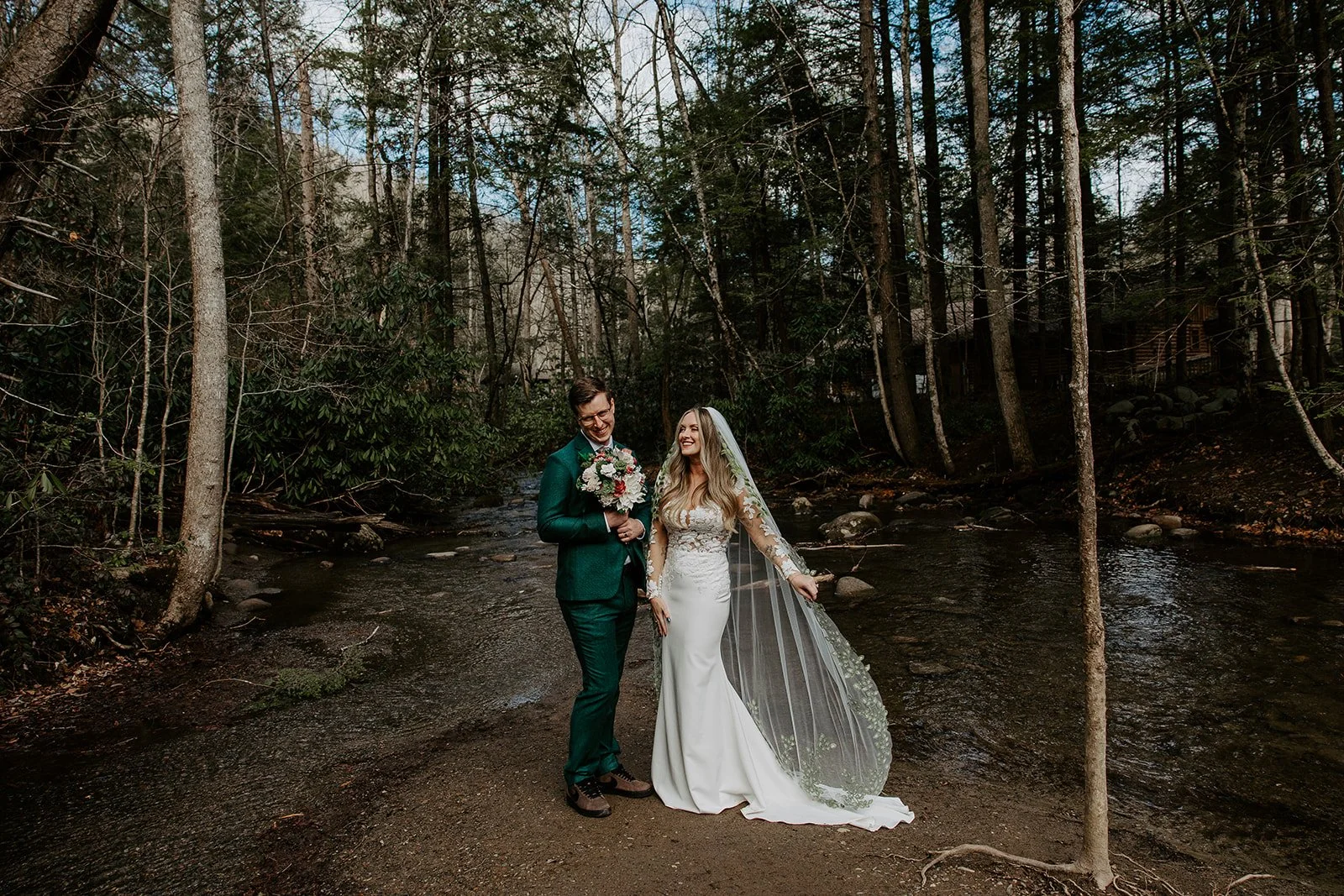
Where to Stay Near Great Smoky Mountains National Park
Where you base yourself during your elopement shapes the whole experience — not just the logistics, but the feeling of the trip. The Tennessee and North Carolina sides of the park have genuinely different characters, and the right choice depends on which part of the park you're eloping in, how much seclusion you want, and what kind of environment you want to come home to at the end of the day.
Tennessee Side
The Tennessee side is anchored by Gatlinburg and Pigeon Forge — busy, accessible, and full of options at every price point. If your ceremony is at Cades Cove, the Foothills Parkway, Greenbrier, Cataract Falls, or anywhere in the western and central TN corridor, staying on this side puts you closest to your locations and keeps your morning timeline relaxed.
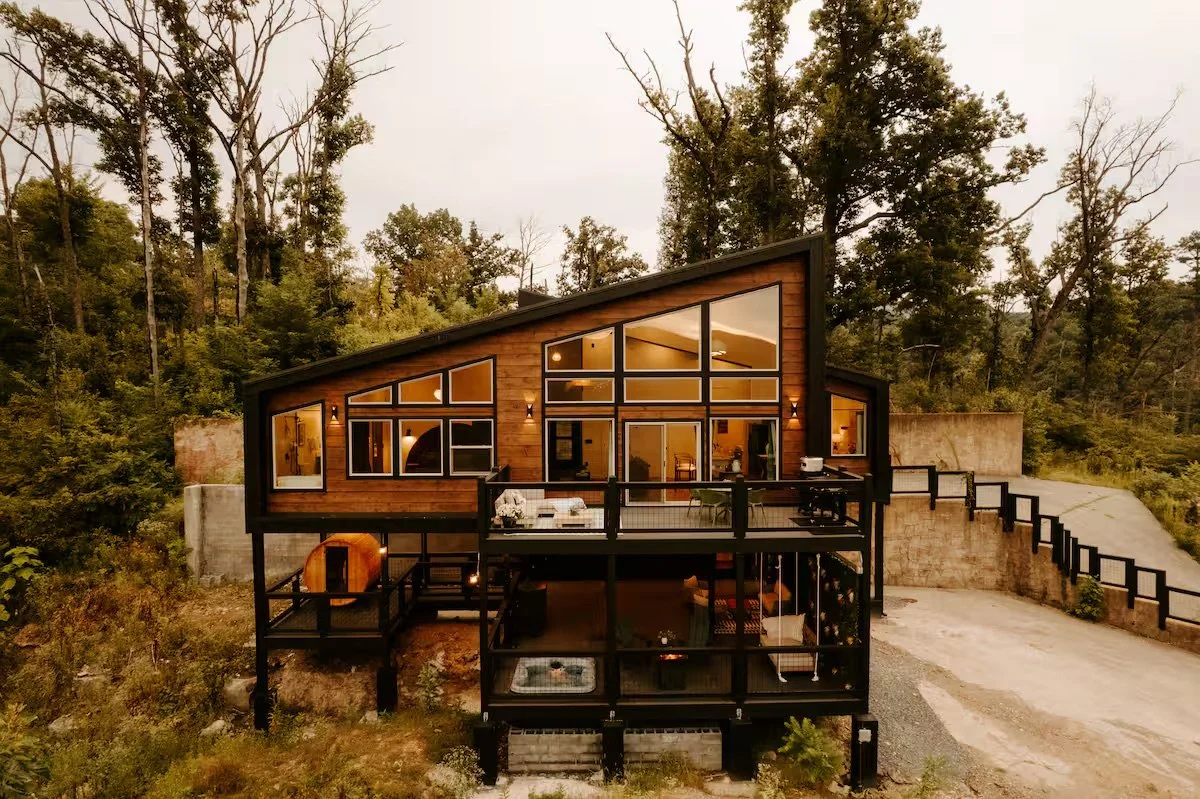
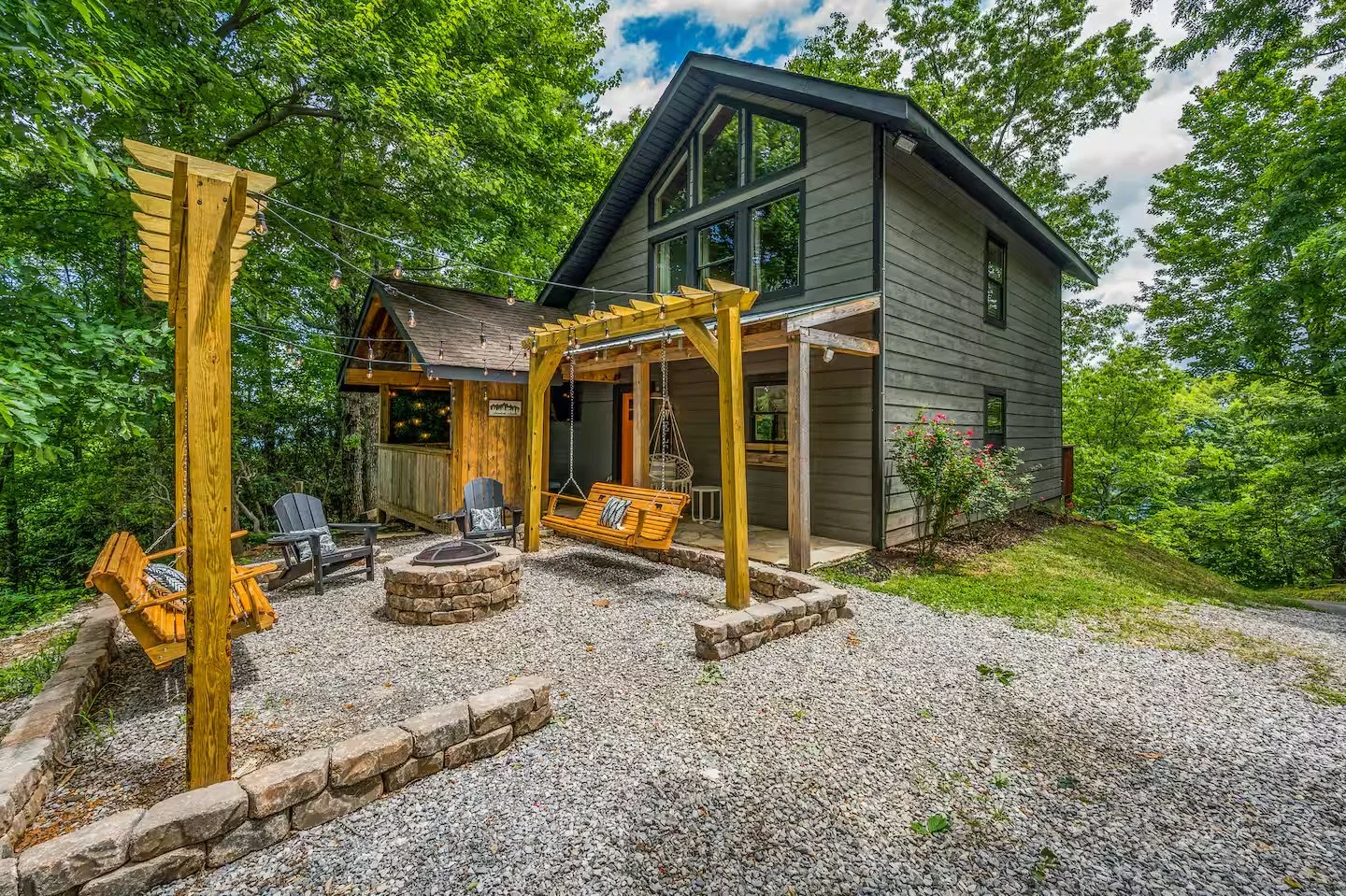
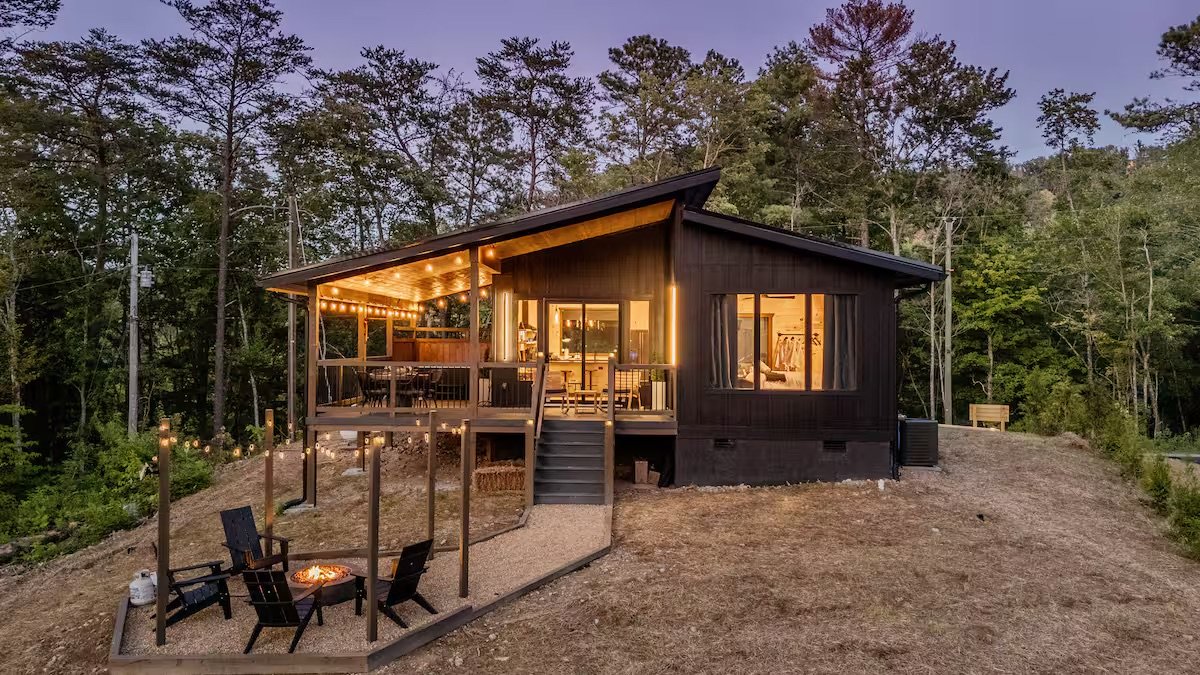
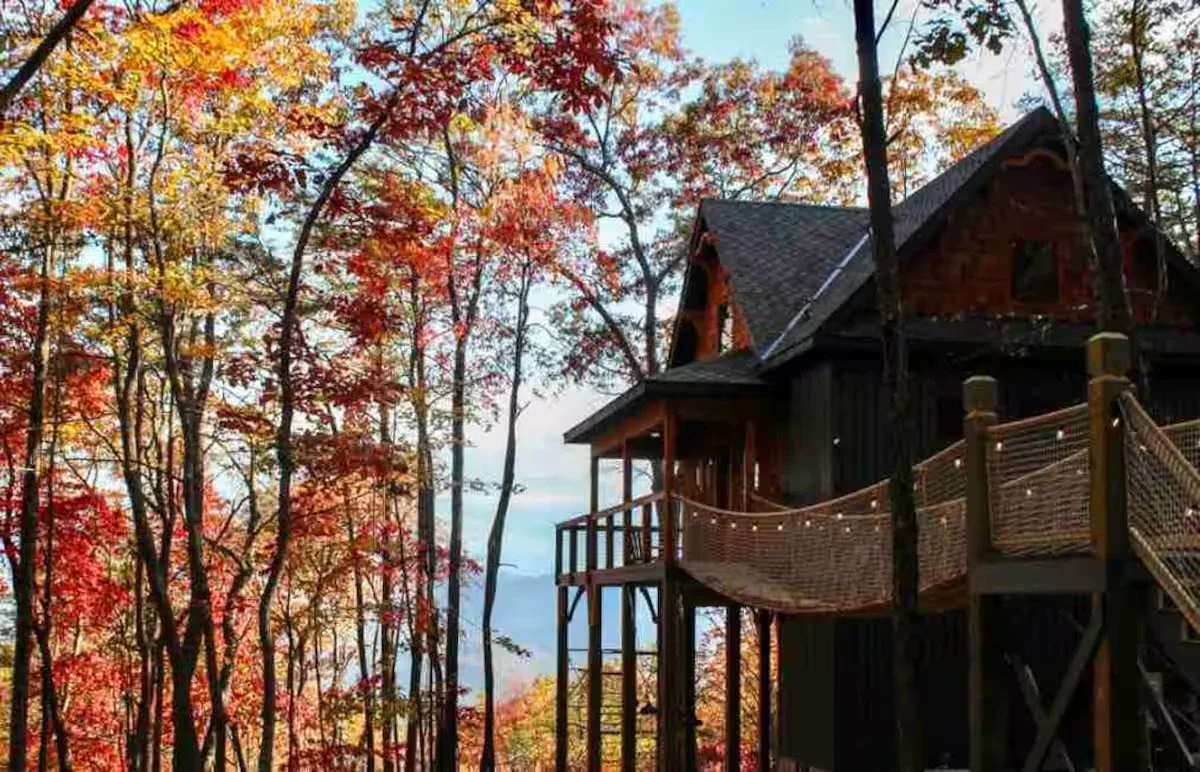
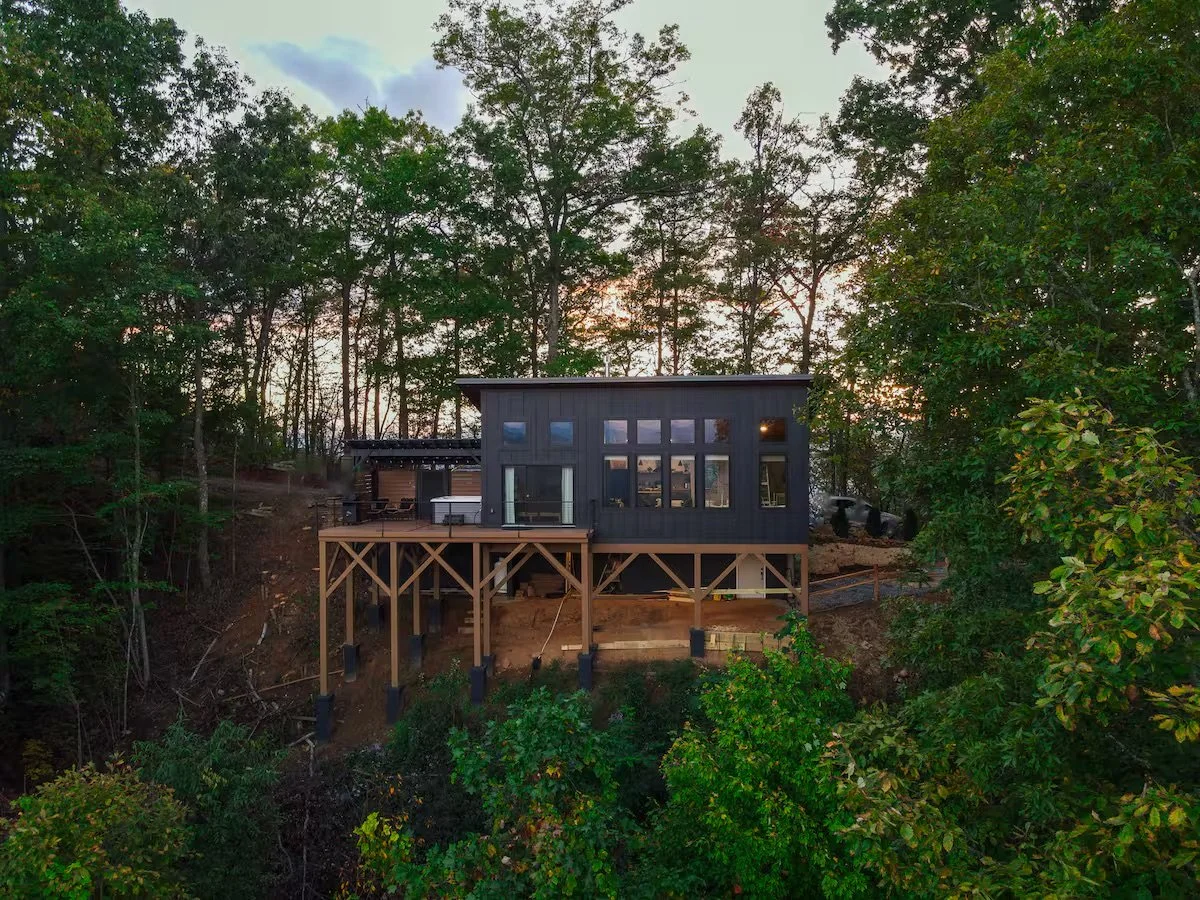
For couples who want privacy and atmosphere over convenience, the mountains above Gatlinburg and Pigeon Forge are dense with cabin rentals — many perched on ridges with long views, hot tubs, and the kind of seclusion that makes the surrounding chaos feel very far away. These are consistently the most popular lodging choice for elopement couples on the Tennessee side, and for good reason.
Recommended Airbnbs — Tennessee Side
For a more traditional hotel experience, the Tennessee side has several upscale resort options within easy reach of the park:
Riverstone Resort & Spa — Pigeon Forge
Westgate Smoky Mountain Resort & Waterpark — Gatlinburg
Dollywood's DreamMore Resort & Spa — Pigeon Forge
Margaritaville Resort Gatlinburg — Gatlinburg
The Ramsey Hotel & Convention Center — Cherokee, NC (worth noting for couples splitting time between sides)
North Carolina Side
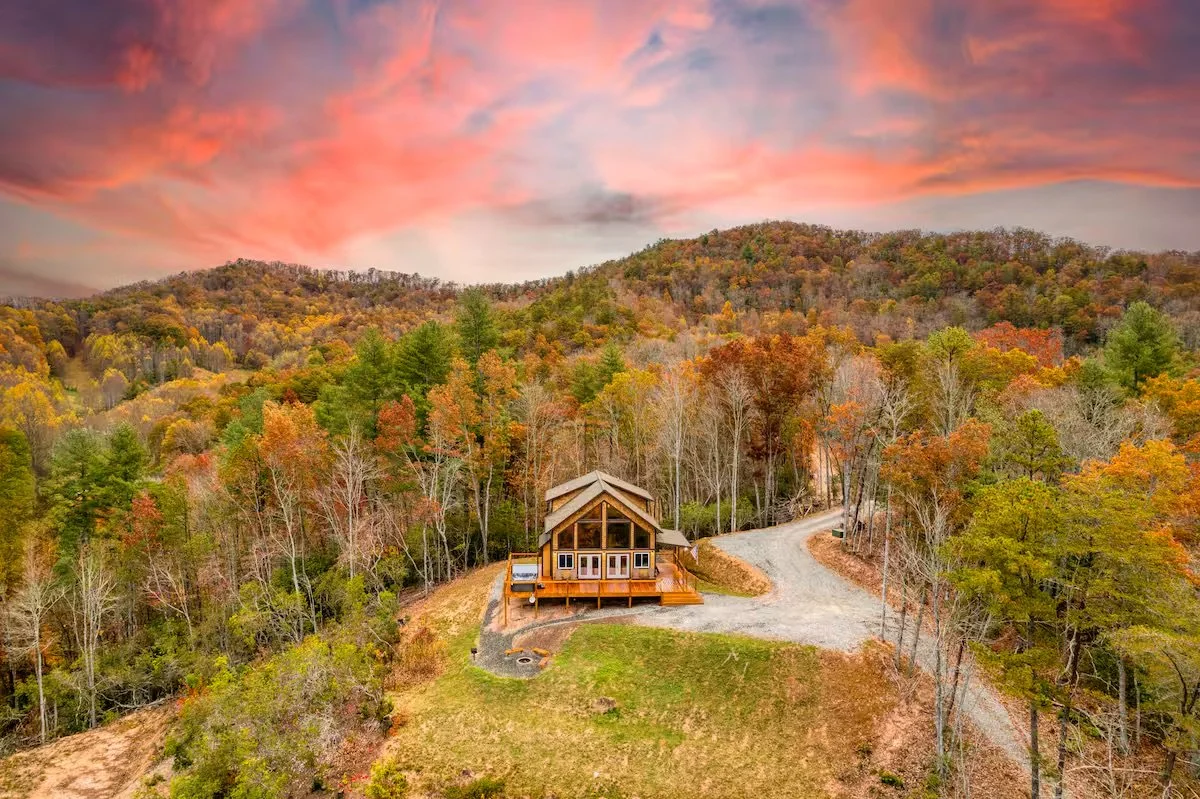
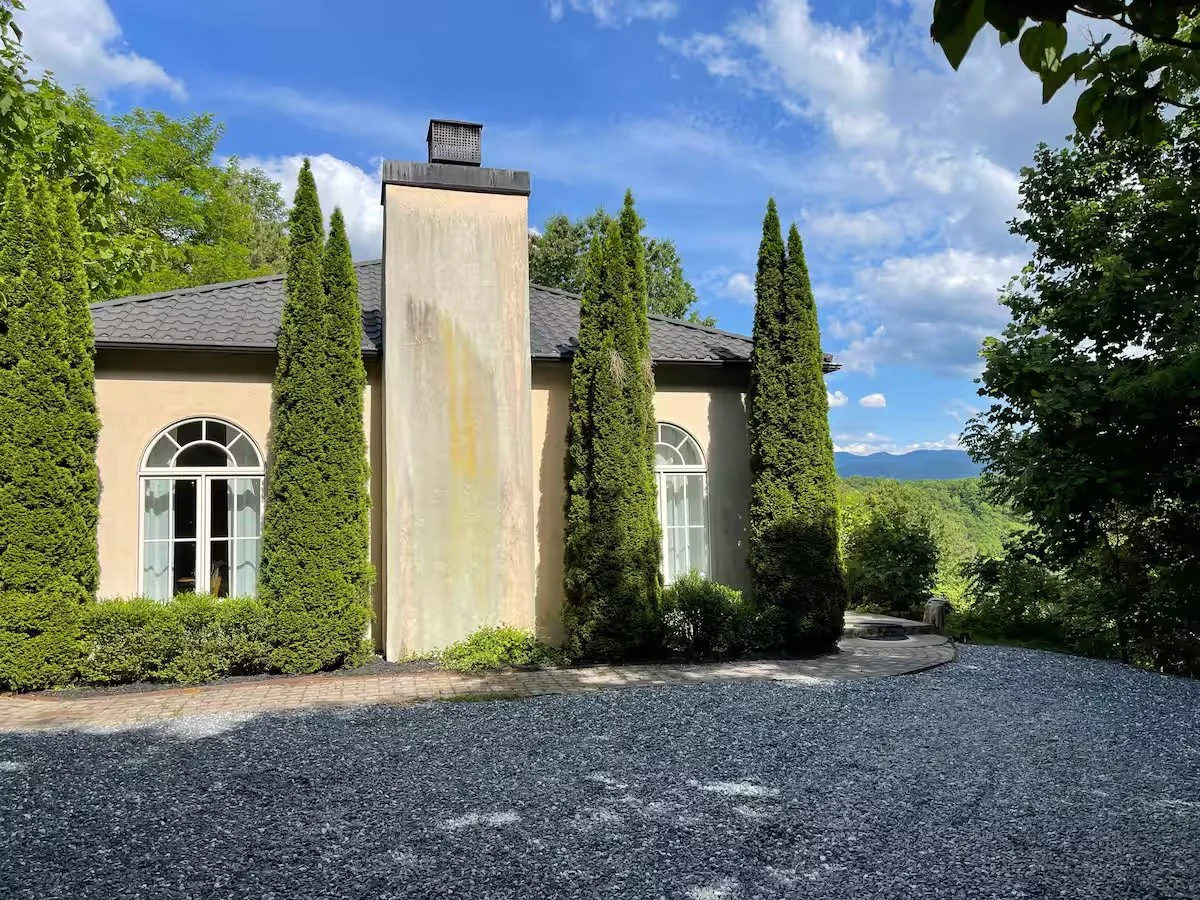
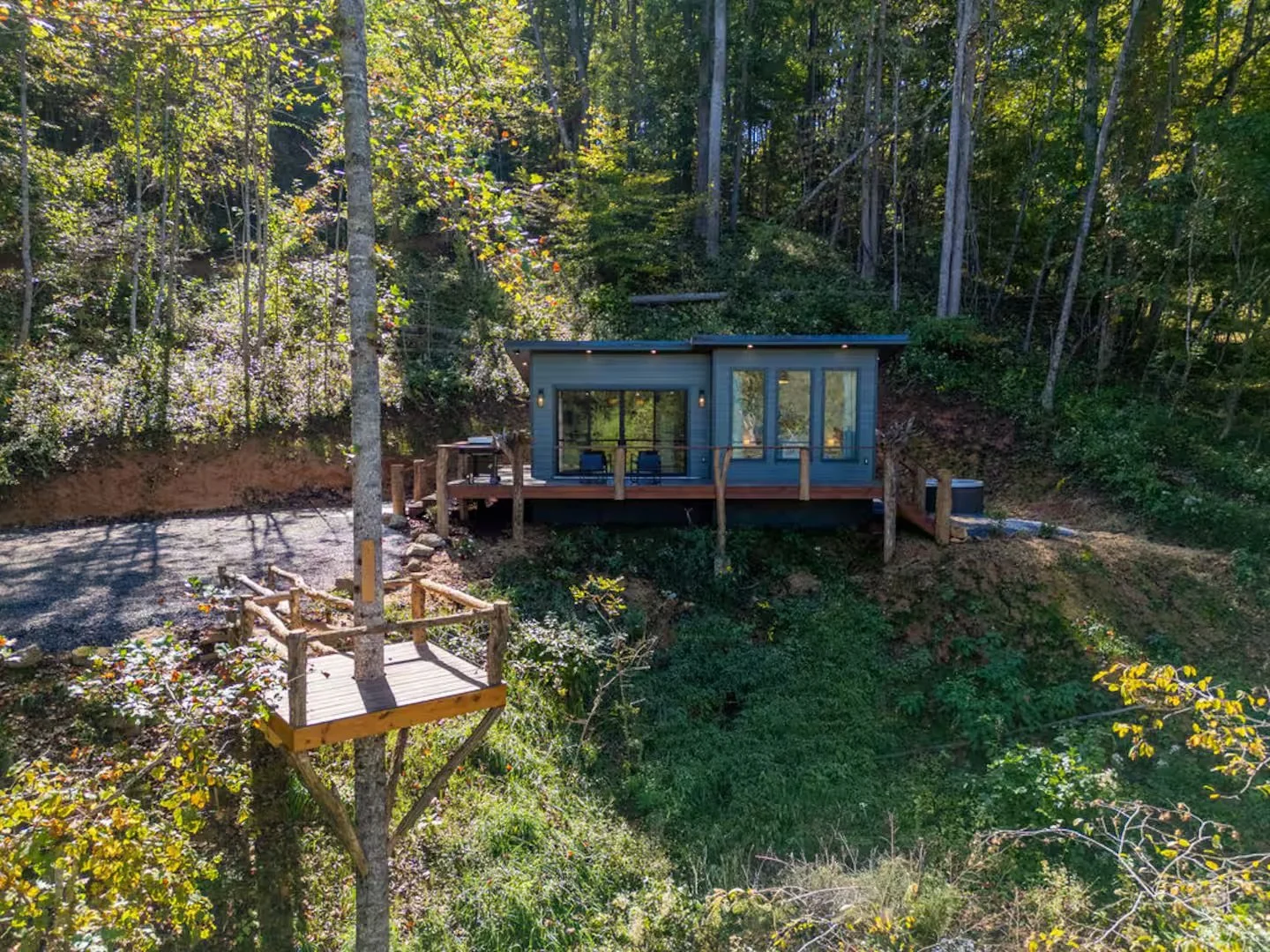
The North Carolina side of the park is quieter, less commercial, and — for the right couple — significantly more appealing as a base. Cherokee sits at the main NC entrance and offers easy access to Mingus Mill, the Oconaluftee corridor, and the road to Cataloochee. Bryson City, about 15 minutes from the Deep Creek entrance, has become one of the most well-regarded small towns in the western NC mountains — good food, independent lodging, and a genuine sense of place without the noise of the Tennessee side.
If your ceremony is on the NC side of the park, or if you're planning a multi-day elopement that moves between both sides, basing yourself in Bryson City or the mountains above Cherokee gives you a quieter home base and a very different texture to your trip.
Asheville is worth considering for couples who want a full city experience alongside their park time — about 90 minutes from the main NC entrance, it offers exceptional food, lodging, and independent culture, and pairs naturally with a one or two night stay before or after your ceremony.
Recommended Airbnbs — North Carolina Side
Camping in Great Smoky Mountains National Park
For couples who want to stay inside the park itself, Great Smoky Mountains has ten frontcountry campgrounds across both sides. These range from large, reservation-based campgrounds to smaller, more remote sites that require more planning but offer a genuinely immersive experience.
Tennessee Side
Abrams Creek Campground
Big Creek Campground (also accessible from NC)
Cades Cove Campground
Cosby Campground
Elkmont Campground
Look Rock Campground
North Carolina Side
Balsam Mountain Campground
Cataloochee Campground
Deep Creek Campground
Smokemont Campground
Reservations are strongly recommended from spring through fall and can be made through recreation.gov. If your elopement timeline includes an early morning ceremony, staying inside the park eliminates the drive entirely — a meaningful advantage at locations like Cades Cove or Cataloochee where early arrival makes a real difference.
Real Elopements in Great Smoky Mountains National Park
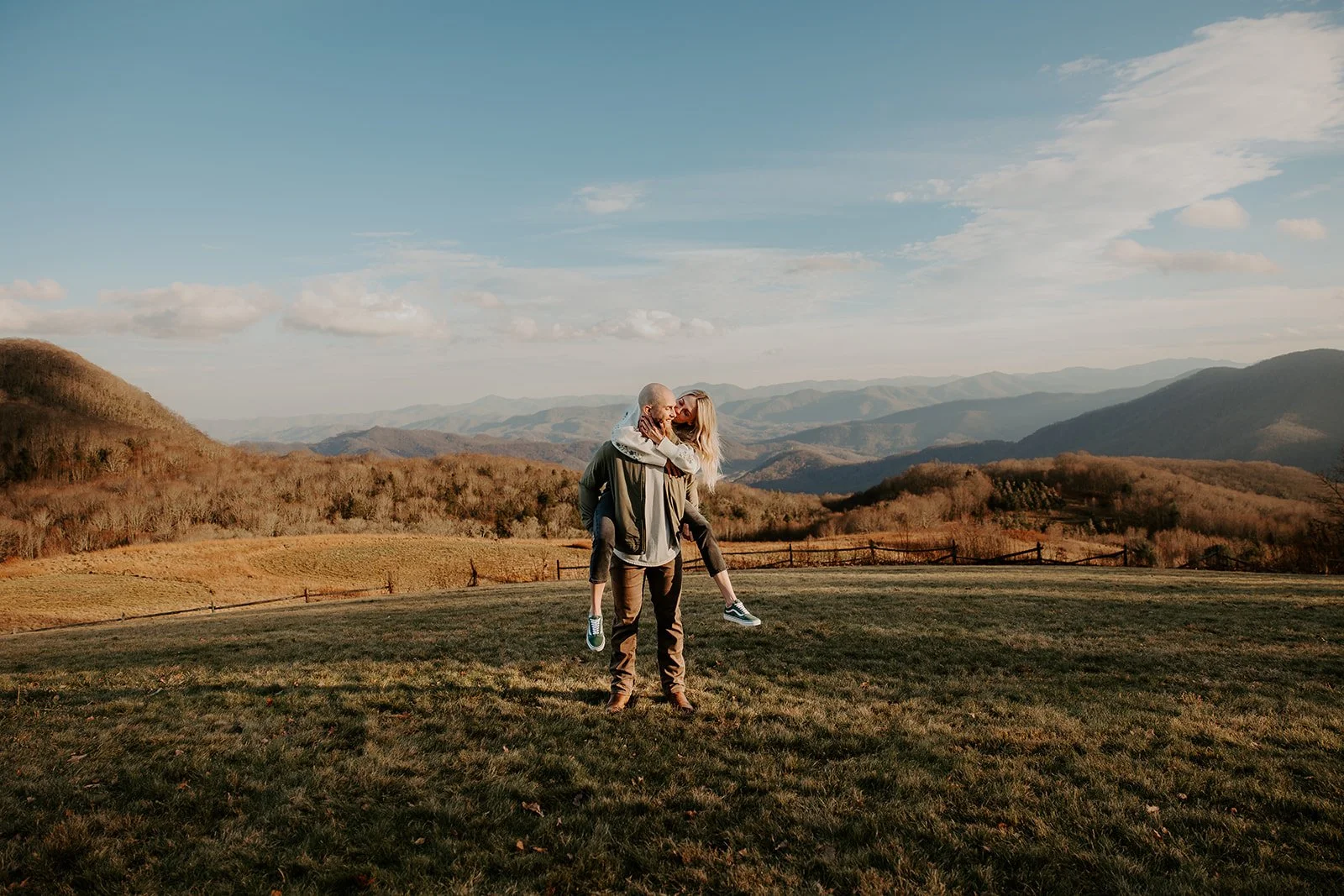
The Smokies look different depending on the season, the elevation, and the couple standing in them. These are a few real experiences from the park — what the locations actually feel like, and what it looks like when a day comes together the way it's supposed to.
Hannah + AJ — Fall Proposal, Great Smoky Mountains National Park
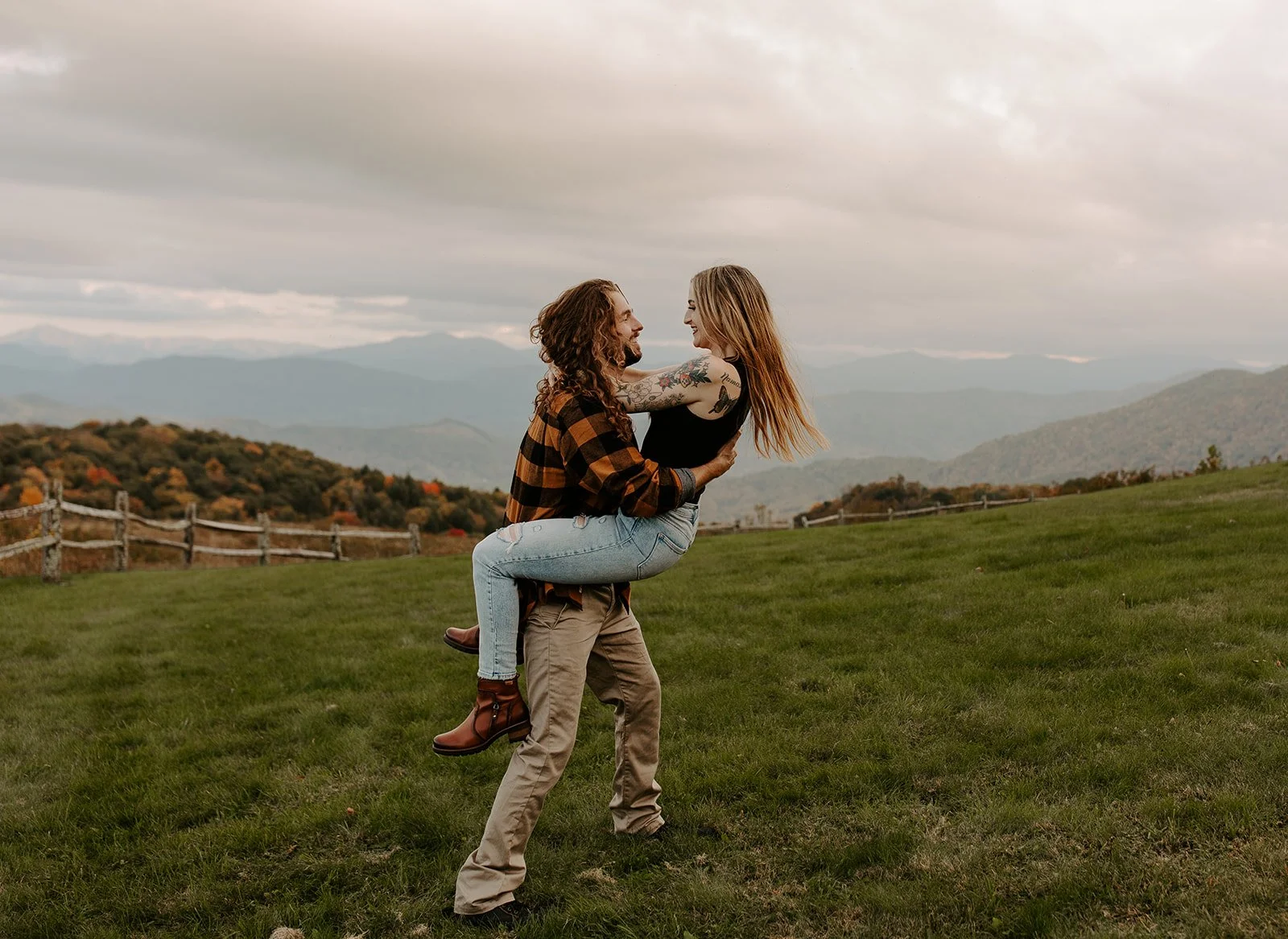

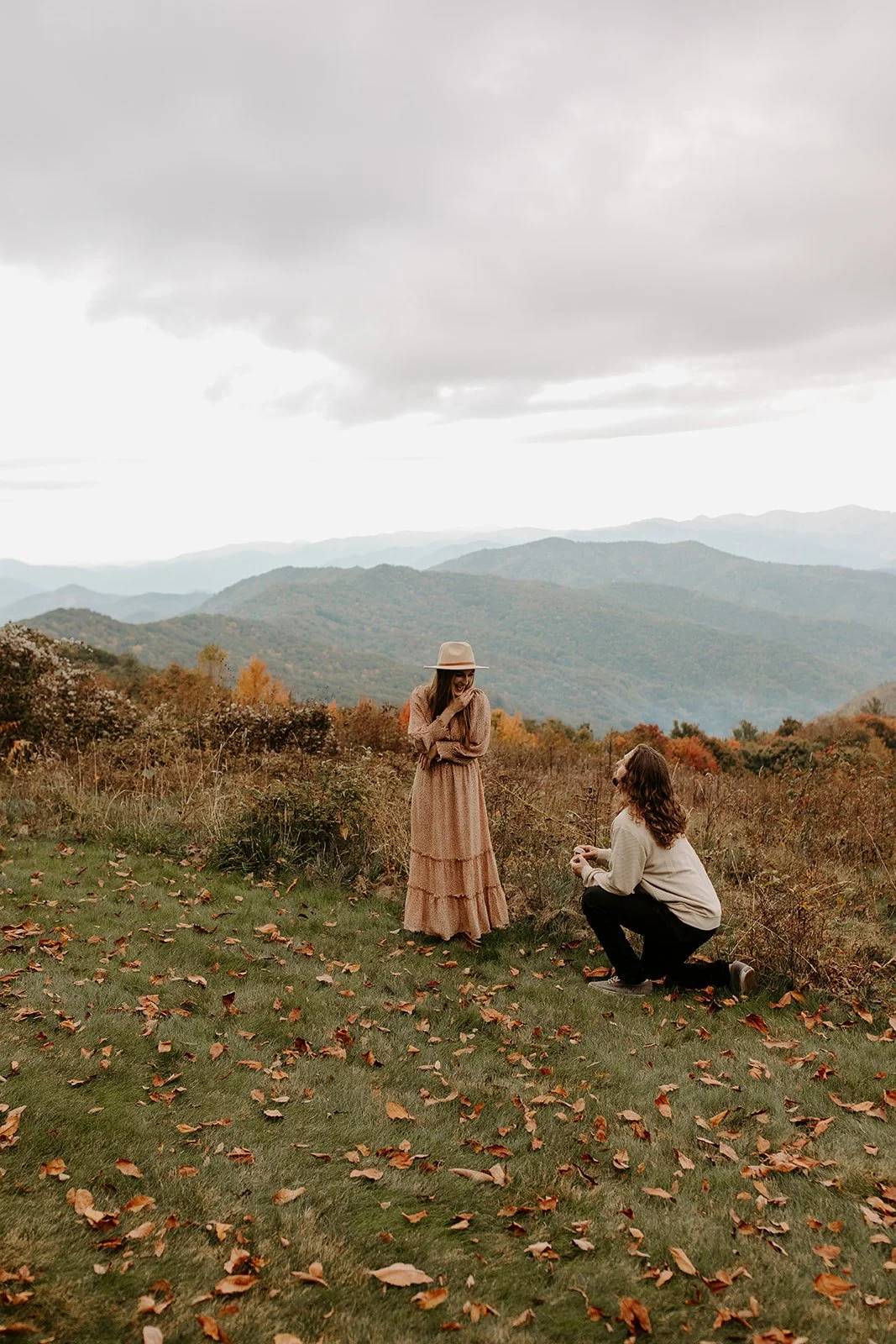
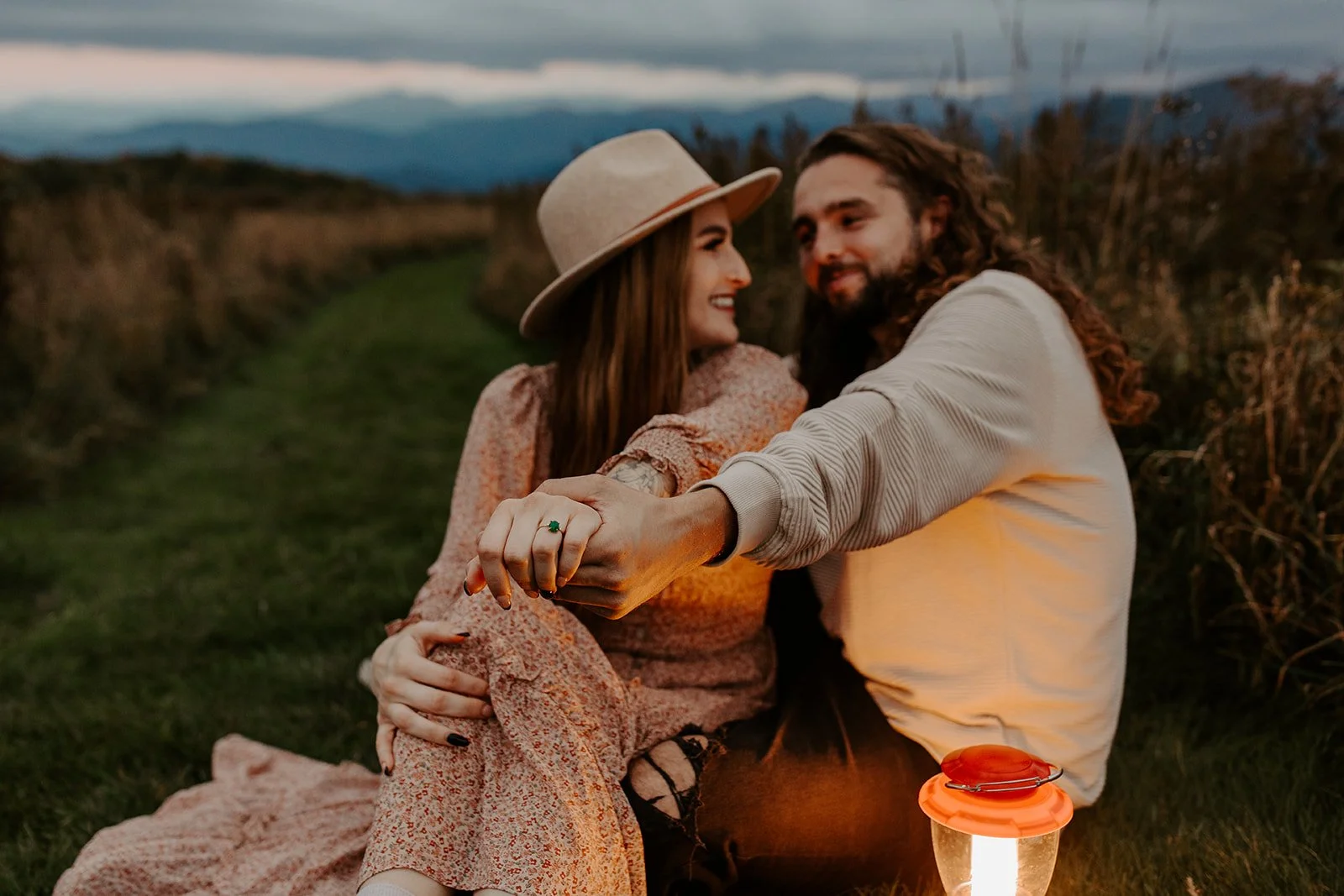
A fall morning in the Smokies, golden light on the ridgeline, and a moment Hannah didn't see coming. This proposal session captures exactly what the park looks like when the color peaks above 4,000 feet — saturated, layered, and genuinely moving.
Josh + Chelsey — Proposal at Purchase Knob, Great Smoky Mountains National Park
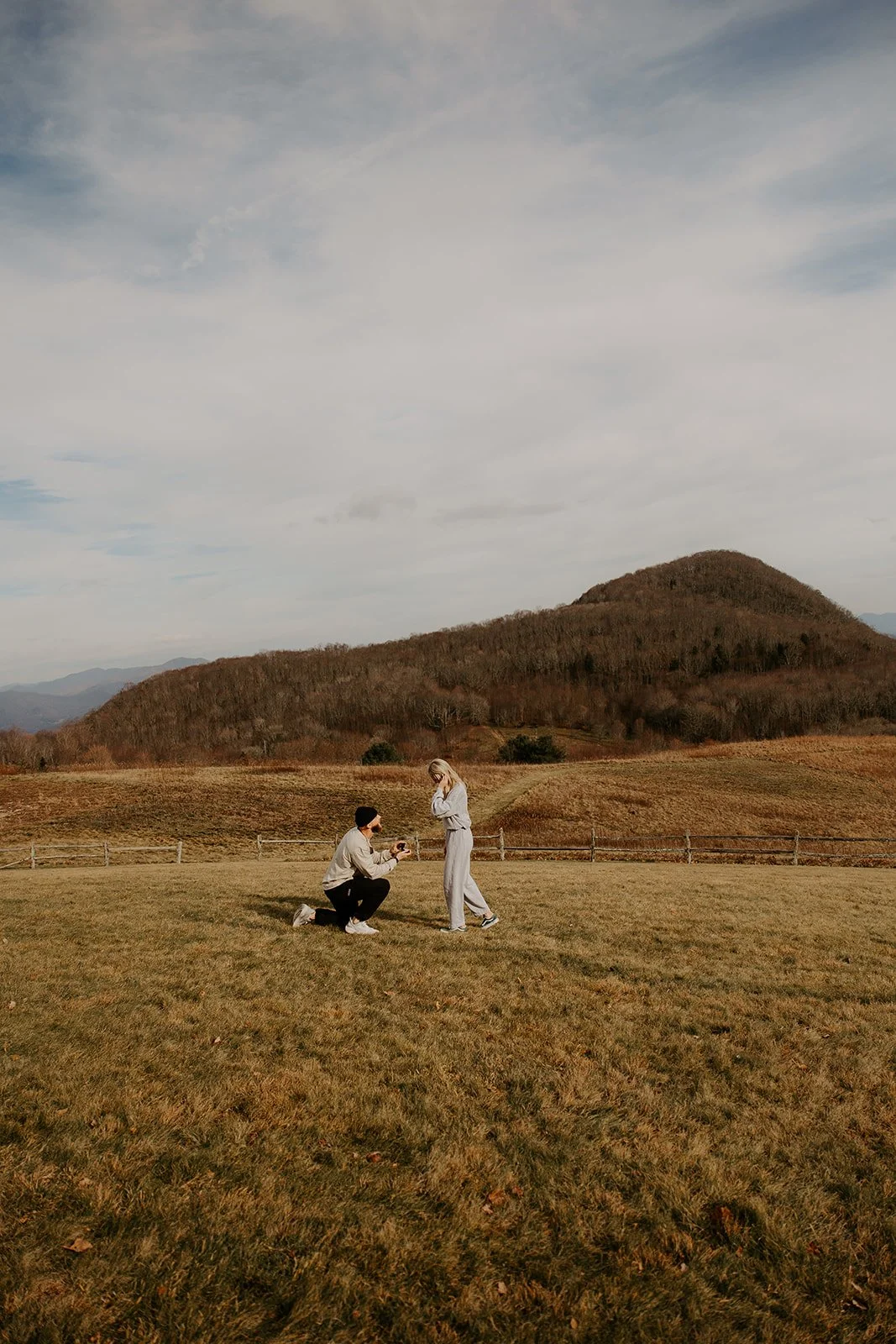

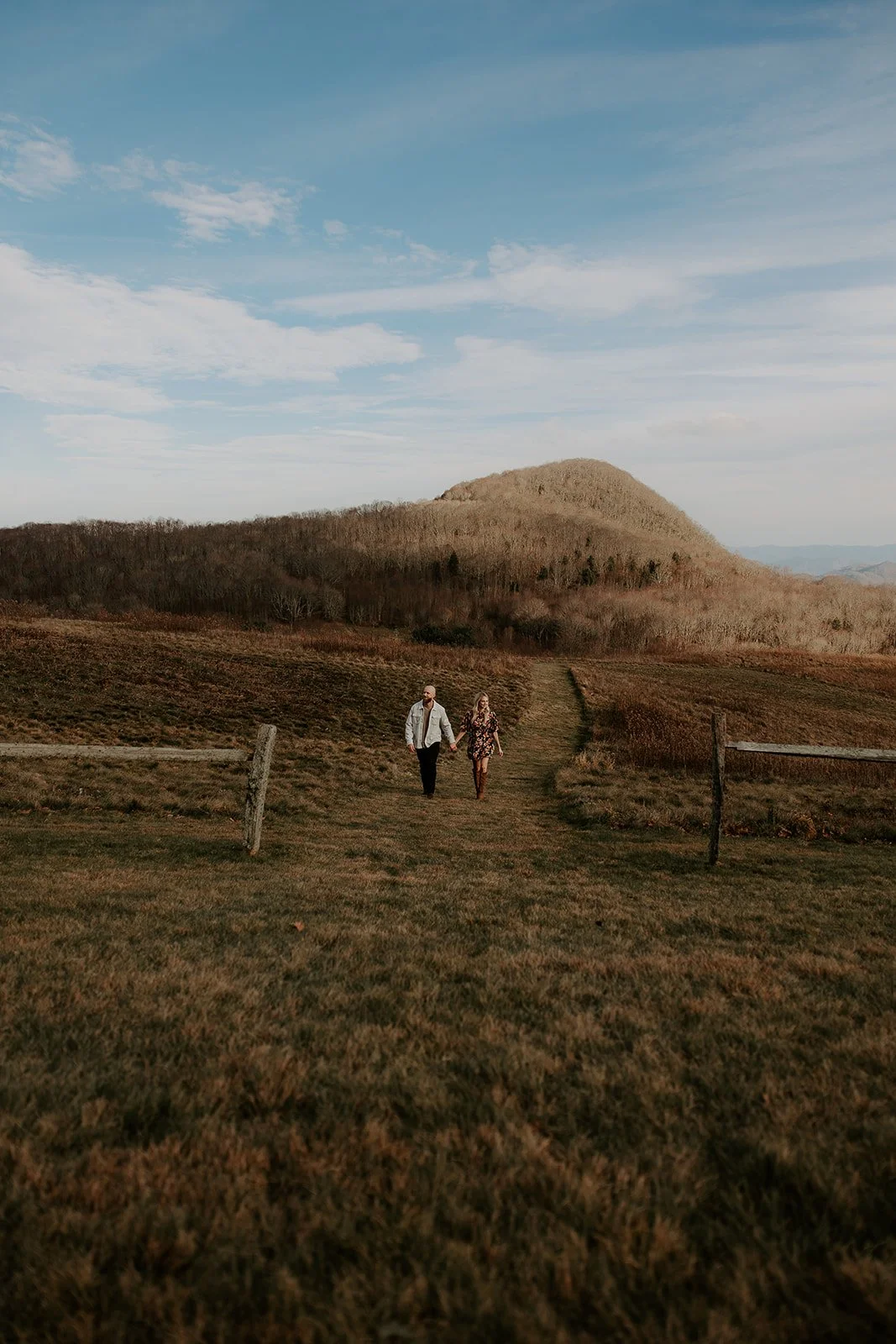
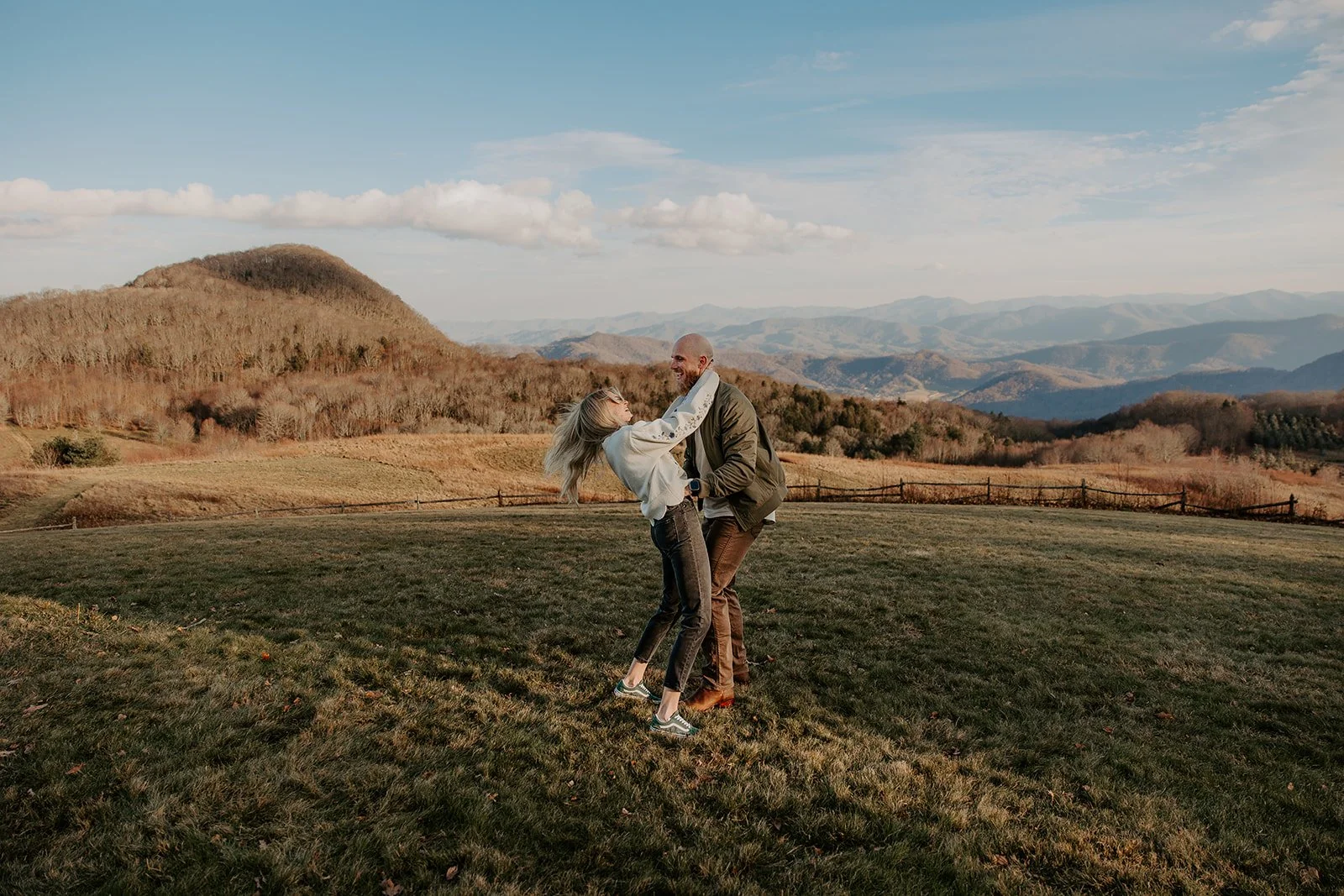
Josh had been planning this for months. His parents met me in the park beforehand, quietly passing off a change of clothes for both of them — because Josh wasn't just proposing at the end of a hike to Purchase Knob, he was surprising Chelsey with freshly engaged portraits on the spot. She had no idea. By mid-November the leaves had already fallen, and the bare canopy opened up the mountain views in a way that only happens in late fall — wide, quiet, and completely unobstructed. The moment she said yes, the whole thing shifted from a hike into something else entirely.
→ See Josh + Chelsey's Gallery (link coming soon)
Amanda + Michael — Elopement, Great Smoky Mountains National Park + Gatlinburg
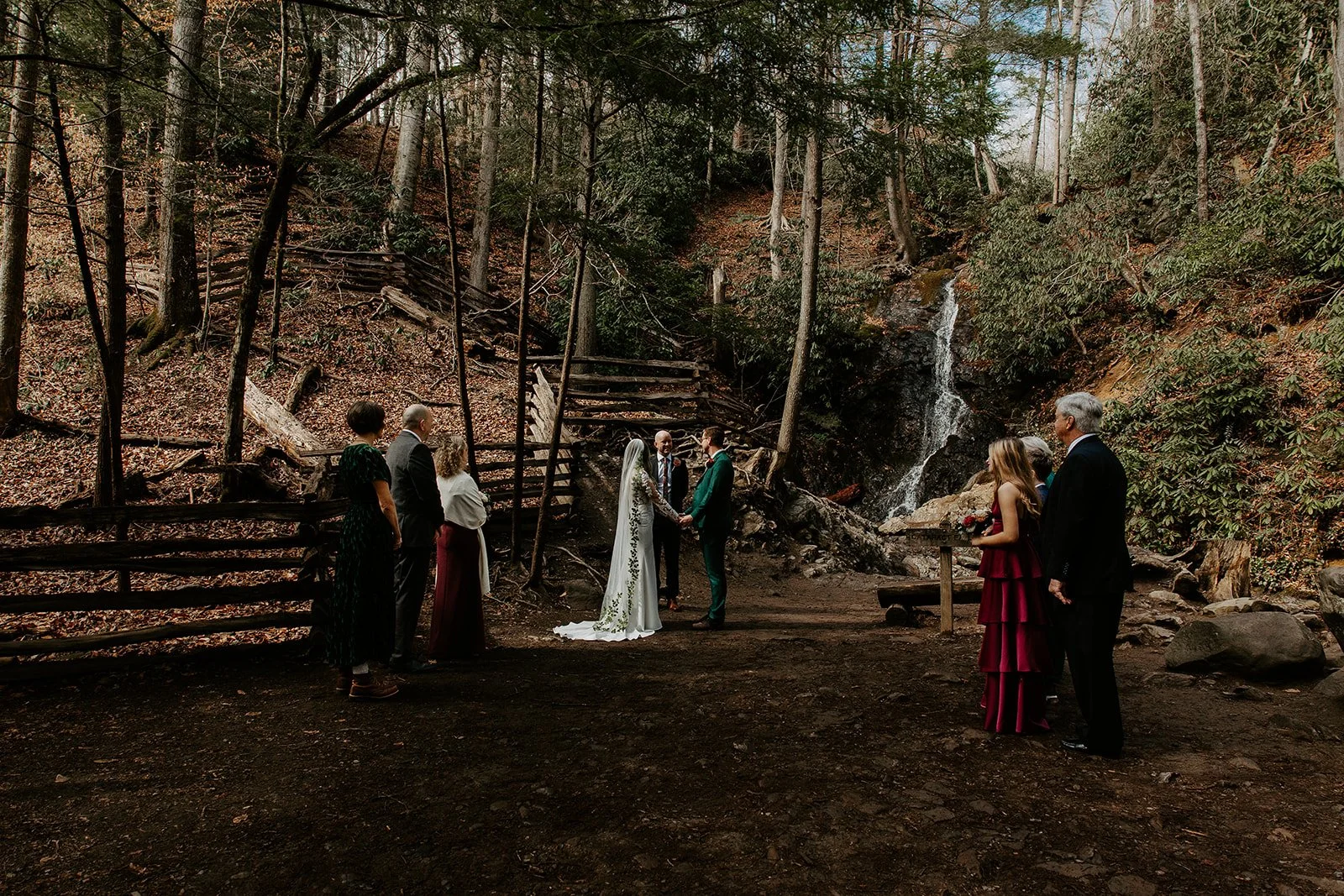
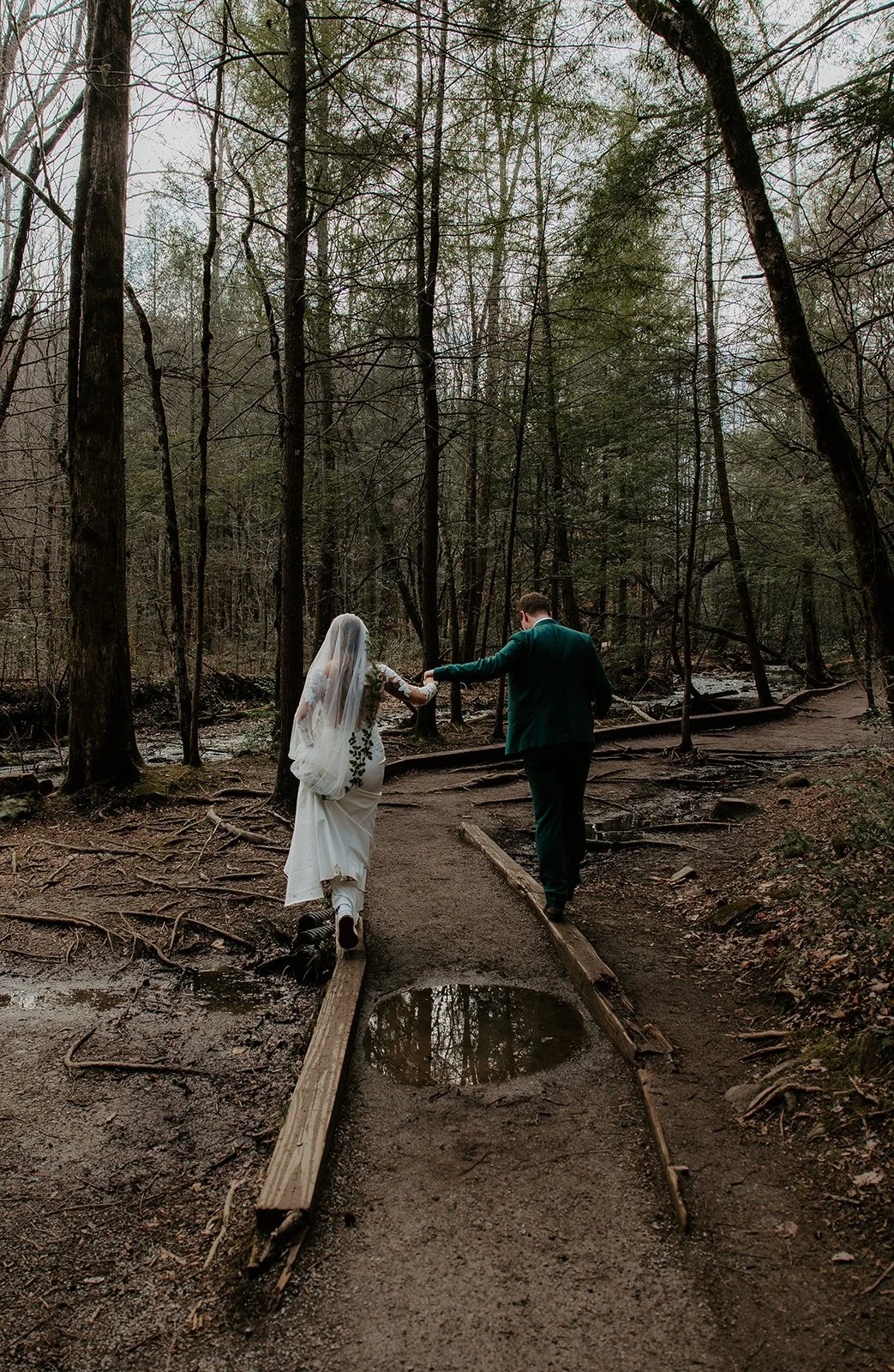
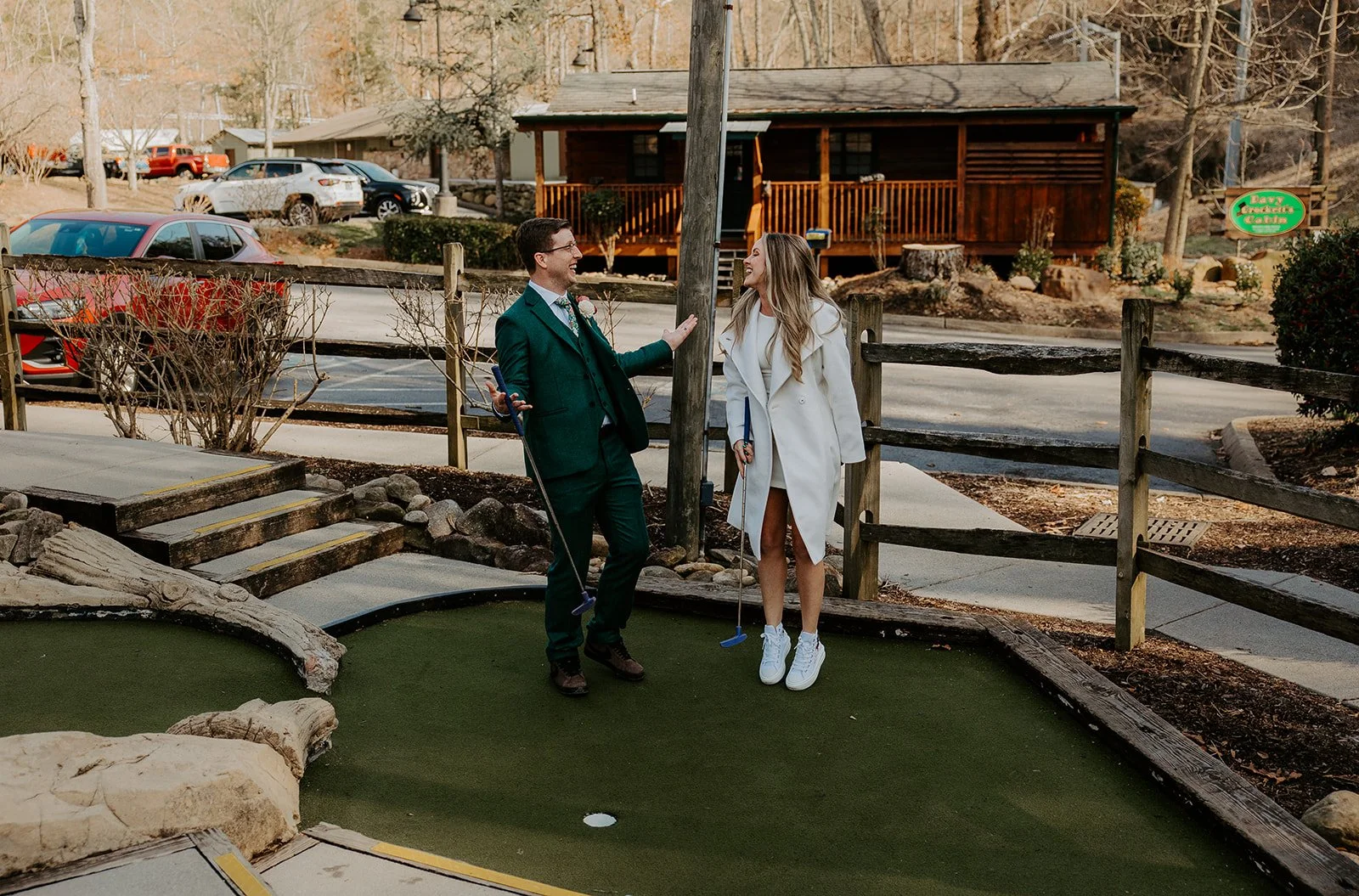
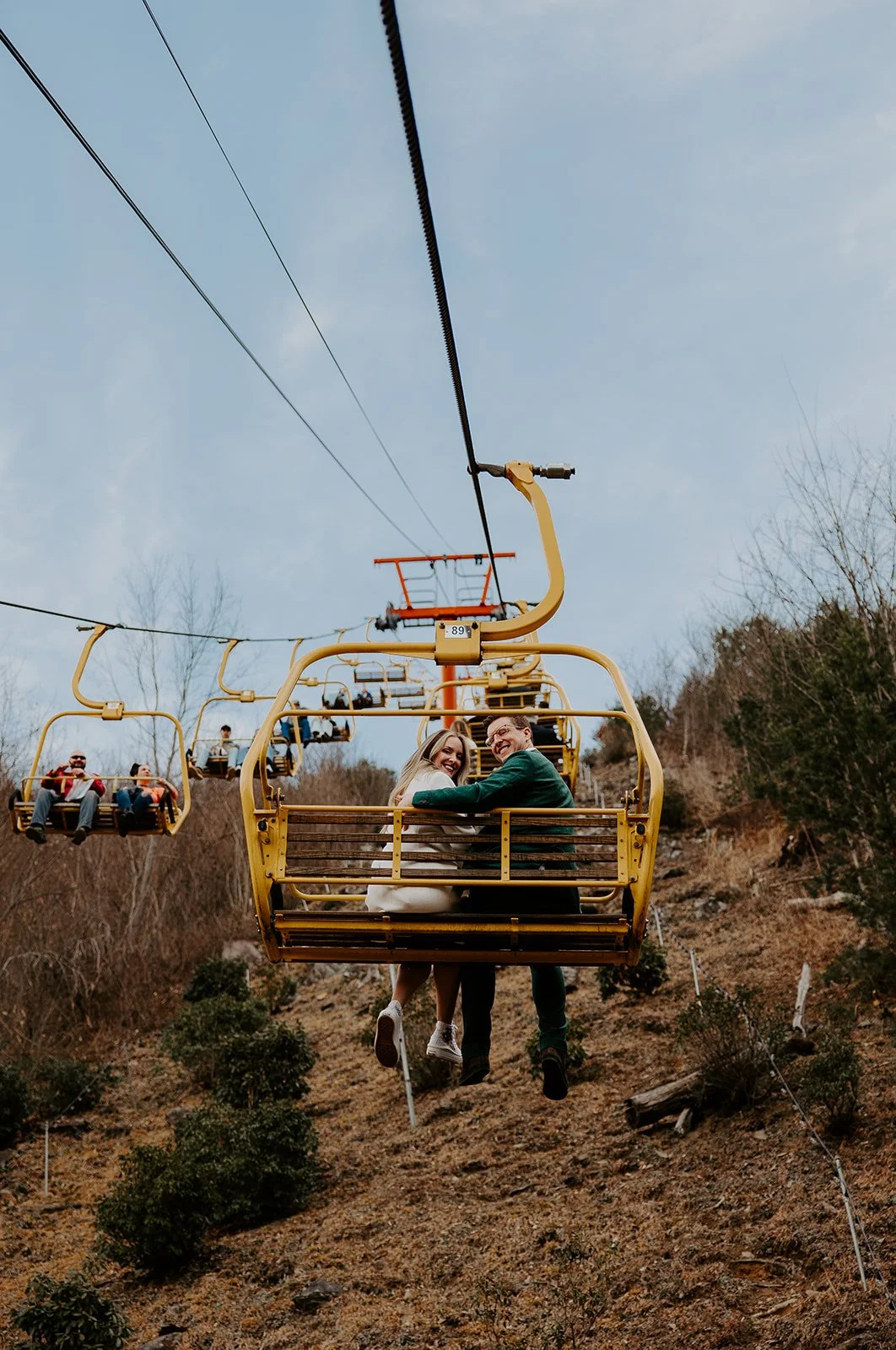
Amanda and Michael rented a mountain cabin above Gatlinburg with their family and started their day with a first look on the deck — just the two of them, elevated above the ridgeline with the Smokies spread out below. From there the whole family drove to Sugarlands Visitor Center and hiked together to Cataract Falls for the ceremony, the waterfall and hemlock hollow holding everyone in that particular quiet that only forest and moving water can make. Afterward they came back down into Gatlinburg — mini-golf, the SkyBridge, the SkyPark — and ended the evening at their cabin with a private chef dinner and the mountains outside every window. It was an elopement that made room for everyone and still felt entirely like theirs.
→ See Amanda + Michael's Gallery (full gallery coming soon)
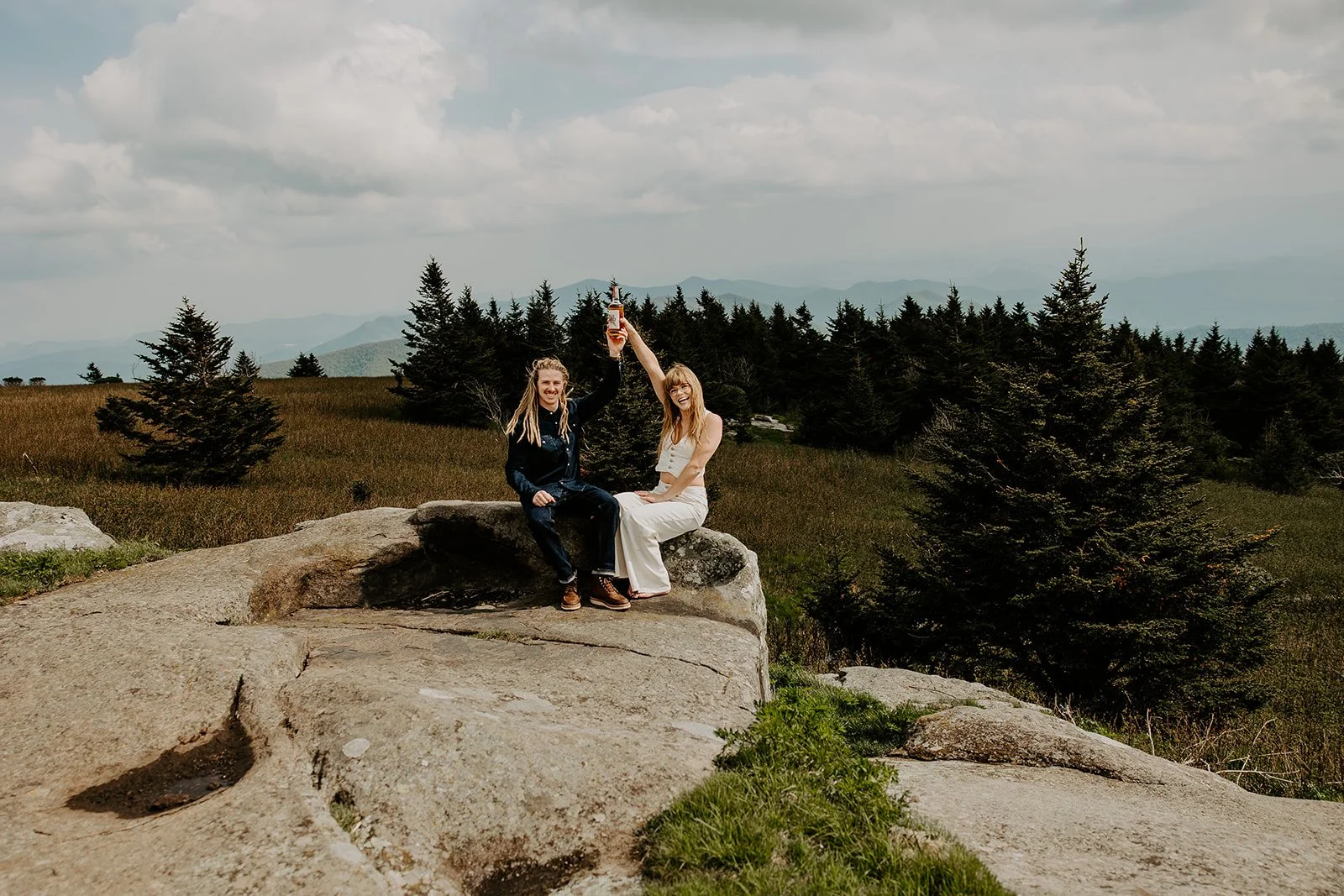
How Much Does it Cost to Elope in Great Smoky Mountains National Park?
The cost of a Smoky Mountains elopement varies widely depending on how you approach it. A simple, intimate ceremony with just the two of you looks very different from a multi-day experience with family, a private chef, and a full day of coverage. Both are valid — what matters is building a budget that reflects what actually matters to you. The two scenarios below give you a realistic range to work from.
-
$60-100 — marriage license
$500 — 3 night local hotel stay
$4650 — 4 hour photography coverage
$300 — bouquet + boutonniere
$500 — wedding dress
$200 — suit rental
$200 — restaurant dinner + drinks
$50 – GSMNP permit
free — DIY hair + makeup
Total: ~$6,500
-
marriage license — $60 - 100
4 night luxury Airbnb stay — $2000
multi-day photography coverage — $10400
bouquet, boutonniere, florals for ceremony and dinner — $1000
wedding dress — $3000
suit purchase — $1000
private chef — $800
5-6” custom cake — $350
onsite hair + makeup — $800
GSMNP permit — $50
Total: ~$19,500
These are starting point estimates — your actual investment will depend on the vendors you choose, how many days you're in the park, and what matters most to you. If you'd like help thinking through what a realistic budget looks like for your specific vision, that's exactly what a consultation call is for.
Great Smoky Mountains Elopement Guide + Checklist
If you're still in the early stages of planning, this is a good next step. The free guide covers the full elopement planning process from start to finish — not just the Smokies, but everything you need to think through regardless of where you're eloping. Logistics, timeline, vendors, legal steps, packing — it's all in there.

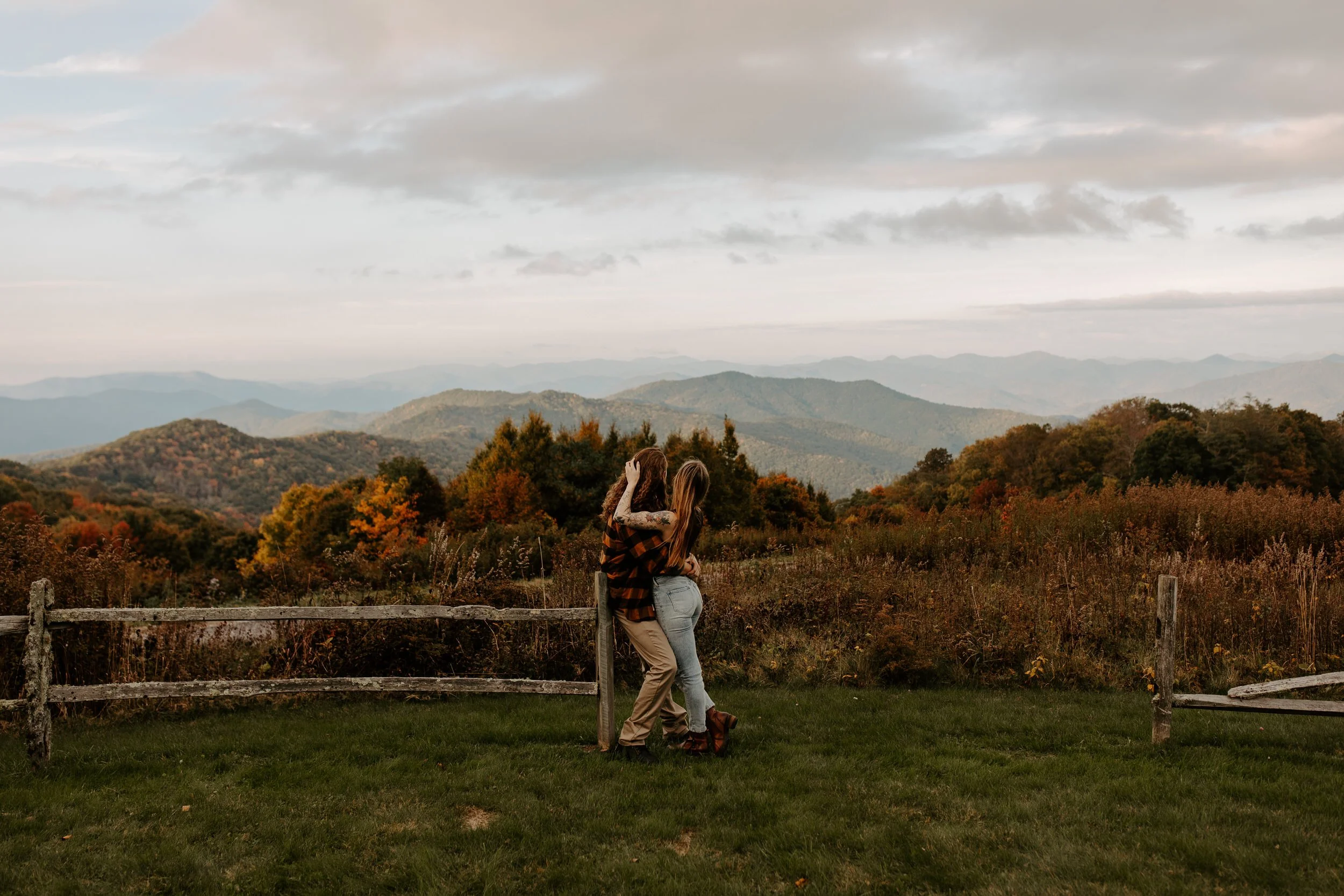
Great Smoky Mountains Timeline Examples
Every elopement day is different, but having a sense of how a full day actually flows — with real drive times, real transition moments, and real breathing room — makes the planning process significantly less abstract. The examples below are built around actual locations in the park and reflect how a relaxed, experience-first day can unfold across different coverage lengths.
These aren't rigid scripts. They're starting points — a way to see what's possible and begin shaping what feels right for your day. Your timeline gets built collaboratively based on your locations, your pace, and what you actually want the day to feel like.
-
8:00 – 10:00 am: Getting Ready at Lodging in Gatlinburg
Soft natural light, detail photos, vow writing, and documentary-style prep moments.10:00 – 10:15 am: Drive to Sugarlands Visitor Center (Cataract Falls Trailhead)
Short scenic drive through the forest.10:15 – 10:30 am: Walk to Cataract Falls Ceremony Spot
A shaded, lush forest setting with moss-covered rocks and gentle falls.10:30 – 11:00 am: Ceremony at Cataract Falls
A beautiful forest ambiance, soft water sounds, and diffused light filtering through the trees.11:00 am – 12:00 pm: Portraits Around the Waterfall + Forest Trails
Explore nearby bridges, mossy creek beds, and fern-lined trails.12:00 – 12:30 pm: Drive to Elkmont Historic District
A charming historic cabin area perfect for storytelling imagery.12:30 – 1:30 pm: Adventure Session in Elkmont
Wander through preserved cabins, forest paths, and Appalachian rustic scenery.1:30 – 2:00 pm: Drive to Metcalf Bottoms Picnic Area
Beautiful riverside location for a relaxing break.2:00 – 3:00 pm: Riverside Picnic + Snack Break
Relax, refuel, hydrate, wade in the river, or enjoy quiet portraits near the water.3:00 – 3:45 pm: Drive to Cades Cove
A scenic loop with valley views, historic homesteads, and wildlife.3:45 – 5:00 pm: Explore Cades Cove Loop
Open meadows, rustic fences, historic cabins, and mountain backdrops.
Great for layering in wildlife, meadow portraits, and candid movement.5:00 – 5:45 pm: Drive to Morton Overlook (for Sunset)
One of the best mountain ridge viewpoints in the Smokies.5:45 – 7:00 pm: Sunset Portraits at Morton Overlook
Golden light hitting the mountain layers, misty blue ridgelines, and sweeping vistas.
Blue hour is especially magical here.7:00 – 7:45 pm: Drive Back Toward Gatlinburg
Blue hour through mountain curves, soft glowing forest, and gentle documentary moments.7:45 – 8:00 pm: Return to Lodging for Private Dinner
Pizza, champagne, charcuterie, first dance in your cabin — perfect cozy ending. -
On Day 1:
11:30 am – 1:30 pm: Getting Ready at Your Gatlinburg Cabin
Late-morning prep, vow writing, detail photos, and relaxed documentary moments.1:30 – 2:10 pm: Drive to Newfound Gap Overlook
Afternoon traffic is steady but manageable; parking turnover is common.2:10 – 2:30 pm: Scout Ceremony Spot + Settle In
Find a quieter overlook section with layered ridge views.2:30 – 3:00 pm: Ceremony at Newfound Gap
High-elevation vows with sweeping Smoky Mountain vistas.3:00 – 3:45 pm: Portraits Around Newfound Gap
Stone walls, evergreen edges, and panoramic layers.3:45 – 4:15 pm: Drive to Chimneys Picnic Area
A peaceful, shaded forest stop perfect for a break.4:15 – 5:15 pm: Picnic Lunch + Creekside Portraits
Relax, snack, and take gentle documentary-style photos near the water.5:15 – 5:45 pm: Drive to Elkmont Historic District
Historic cabins and whimsical, mossy forest paths.5:45 – 6:45 pm: Adventure Session in Elkmont
Rustic textures, forest light, movement-based prompts.6:45 – 7:30 pm: Drive to Clingmans Dome Parking Area
Arrive before golden hour crowds peak to secure parking.7:30 – 8:00 pm: Walk Up to Clingmans Dome Tower
Short, steep paved trail with sweeping views of the ridgelines.8:00 – 9:15 pm: Sunset Portraits + Blue Hour at Clingmans Dome (Sunset: 8:15–8:45 pm)
Stay until 9:15 pm for:
– warm golden glow
– pastel twilight
– deep blue hour tones + silhouettes
– early stars (weather permitting)9:15 – 10:00 pm: Drive Back to Gatlinburg Cabin
10:00 – 11:30 pm: Pizza Under the Stars by a Bonfire
Cozy, intimate evening with stargazing, champagne, and candid storytelling moments.On Day 2:
9:00 – 9:30 am: Slow Morning + Breakfast at Cabin
Hydrate, enjoy coffee, soak in those post-ceremony vibes.9:30 – 10:15 am: Drive to the Greenbrier Area
10:15 – 11:15 am: River Portraits + Exploration in Greenbrier
Cold, clear water and soft forest tones for a fresh gallery feel.11:15 – 12:00 pm: Drive to the Tennessee–North Carolina Border (Oconaluftee)
12:00 – 1:00 pm: Explore Oconaluftee River Trail
Easy, beautiful riverside trail with elk sightings at times.1:00 – 1:45 pm: Lunch in Cherokee or Picnic Nearby
1:45 – 2:00 pm: Drive to Mingus Mill
Historic, restored mill with rustic charm.2:00 – 2:45 pm: Portraits at Mingus Mill
Waterwheel, forest edge, wooden textures2:45 – 3:15 pm: Drive to Morton Overlook
3:15 – 4:45 pm: Golden Hour Portraits at Morton Overlook
– Warm light on the rolling Smoky layers.
– Choose between wide sweeping views or tucked-away overlook corners.4:45 – 5:30 pm: Drive Back to Gatlinburg
5:30 – 7:00 pm: Dinner in Gatlinburg or Cabin
Relaxed, celebratory evening to end the multi-day adventure.
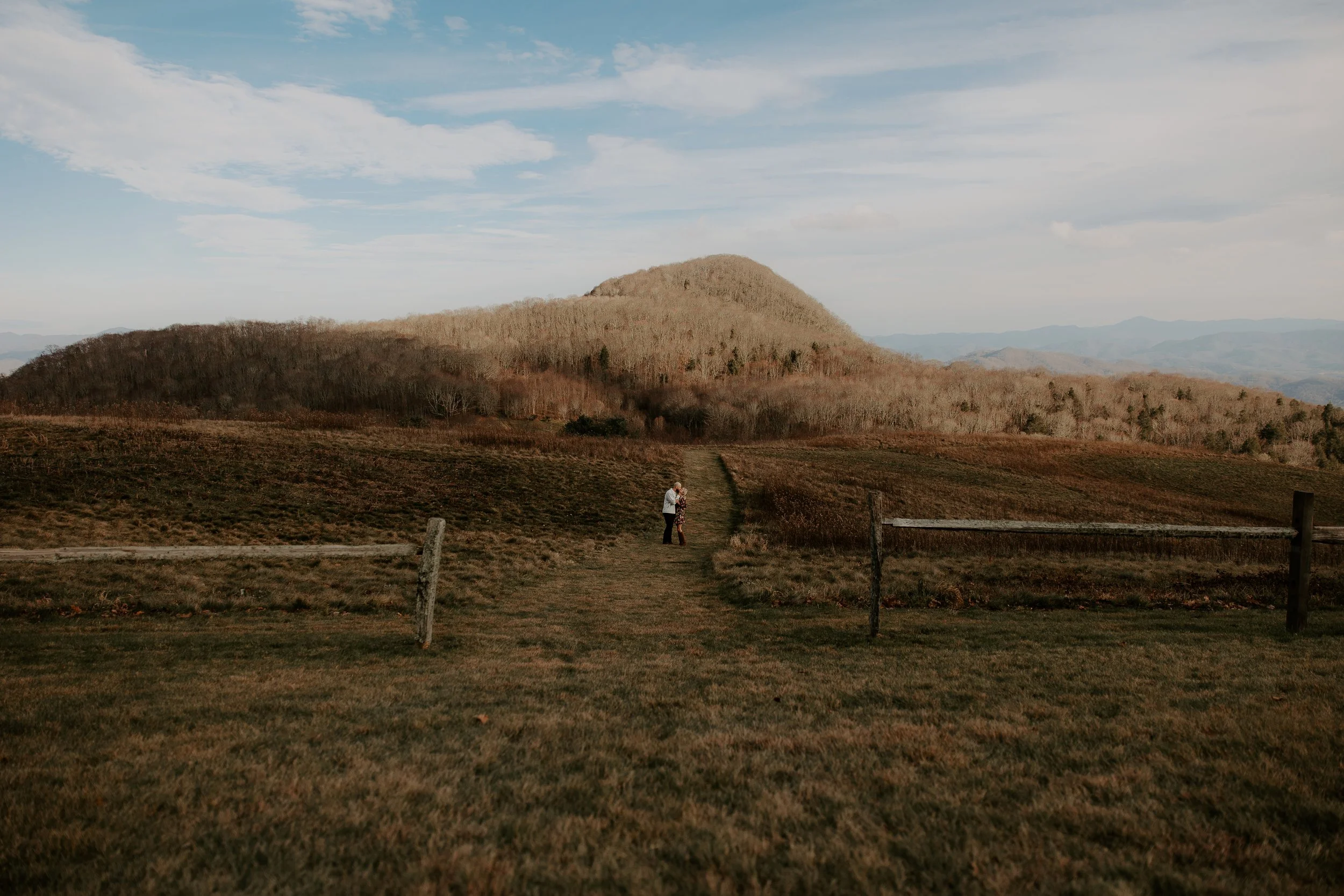
Great Smoky Mountains National Park Elopement Packages
Every elopement experience starts with a conversation about what you actually want your day to look and feel like — not a package menu you pick from. From there, everything is built around your vision: the locations, the timeline, the pace, and the moments that matter most to you.
All Great Smoky Mountains elopement experiences include:
All travel (your investment does not change based on location)
Personalized location recommendations based on season, accessibility, and your vision
Permit research and guidance
Curated vendor recommendations — florals, hair and makeup, private chefs, officiants, and more
Activity ideas tailored to your relationship and interests
A handcrafted elopement timeline designed for a relaxed, intentional day
High-resolution digital images with full printing rights, delivered through a private online gallery
Optional drone coverage (FAA Part 107 certified)
Optional heirloom album design
Slideshow delivered upon gallery delivery
Elopement experiences begin at $4,650. Coverage length and structure are guided collaboratively based on what will best support your day.
Current Specials for Great Smoky Mountains Bookings
Frequently Asked Questions About Eloping in Great Smoky Mountains National Park
-
Yes. A Special Use Permit is required for all wedding ceremonies held at a designated location within the park. The application fee is $50 (non-refundable) and must be submitted no less than 14 days before your ceremony date. You can apply through the NPS website at nps.gov/grsm. The permit specifies your approved location, date, and time window — including setup, ceremony, photography, and cleanup.
-
It depends on which side of the park your ceremony takes place on. Because Great Smoky Mountains National Park spans both states, you can legally marry with a license from either Tennessee or North Carolina — but your license must be issued by the same state where your ceremony occurs. Tennessee has no waiting period, requires no witnesses, and is valid for 30 days. North Carolina has no waiting period, requires two witnesses, and is valid for 60 days. The choice usually comes down to which side of the park you're eloping on and whether you need witnesses.
-
Up to 25 people are permitted at outdoor ceremony locations, including all vendors and their vehicles. Historic church locations — including the three churches in Cades Cove, Palmer Chapel in Cataloochee, and Smokemont Church — can accommodate up to 50 people. These limits include everyone present: your photographer, officiant, florist, and any guests all count toward the total. Vehicle limits also apply: 6 vehicles at outdoor locations, 8 vehicles at church locations.
-
Great Smoky Mountains National Park does not charge an entrance fee, so your America the Beautiful Pass won't be needed for entry. However, parking tags are required for all vehicles staying longer than 15 minutes, and the America the Beautiful Pass cannot be used to waive the parking fee. Daily parking tags cost $5, weekly tags cost $15, and annual tags cost $40. Each tag is valid for a single vehicle and must display that vehicle's license plate number.
-
The park has 50 approved ceremony locations across the Tennessee and North Carolina sides, ranging from waterfall hollows and high-elevation overlooks to historic Appalachian churches and riverside picnic areas. Popular options include Cades Cove, Cataract Falls, Greenbrier, Newfound Gap, Foothills Parkway overlooks, Mingus Mill, and Cataloochee Valley. Each location has its own character, accessibility level, and light at different times of day. The map in the ceremony locations section above shows all 50 sites organized by region.
-
Every season in the Smokies is genuinely worth considering. Spring (March–May) brings wildflowers and swollen waterfalls. Summer (June–August) offers lush forest and long days, though crowds and afternoon thunderstorms are a factor at lower elevations. Fall (September–November) is the most popular season — the color sequence here is one of the best in the eastern U.S., peaking above 4,000 feet in early October and moving down through mid-November. Winter (December–February) brings dramatically fewer crowds, occasional snow, and a quietness that makes for some of the most intimate elopement experiences in the park. Weekday dates in any season significantly reduce crowds and parking competition.
-
Drones are not permitted within Great Smoky Mountains National Park boundaries. This is a park-wide restriction that applies regardless of FAA certification. Drone coverage is available for elopement experiences that include time outside the park — in surrounding areas, at your lodging, or at nearby locations not under NPS jurisdiction. If aerial coverage is important to your day, that's worth discussing during the planning process so your timeline can be built to accommodate it.
-
The basic process involves four steps: choose your ceremony location from the 50 approved sites, obtain a marriage license from either Tennessee or North Carolina depending on which side of the park you're eloping on, submit your Special Use Permit application with the $50 fee at least 14 days before your date, and arrange your ceremony, photography, and any vendors. In practice, the planning process involves a lot more — location scouting, timeline design, vendor coordination, and permit logistics — which is why most couples find it helpful to work with a photographer who specializes in national park elopements and can guide the process from start to finish.
-
You're not required to have a photographer, but most couples who elope in the Smokies choose to document the day. Beyond capturing images, an experienced elopement photographer who knows the park can help you choose the right location, build a realistic timeline, navigate the permit process, and make the day feel genuinely relaxed rather than logistically stressful. The difference between a photographer who shoots weddings and one who specializes in national park elopements is significant — the latter has walked your ceremony location in every season and knows exactly where to be when the light is right.
Ready to Plan Your Great Smoky Mountains Elopement?
If you've made it through this guide, you have a solid picture of what eloping in the Smokies actually looks like — the logistics, the locations, the seasons, and what a well-built day can feel like when it comes together. The next step is a conversation.
Whether you're still in the early research stage or you have a date and a location already in mind, I'd love to hear about what you're envisioning. Every elopement I photograph starts with understanding what matters most to you — and building everything else around that.

Learn More About Eloping in the Appalachians


Bethany Wolf
Guided Public-Lands Elopement Photographer
✔ permits & logistics handled
✔ timeline design
✔ location guidance
✔ travel included nationwide